Beyond the hype - how AI can help your business in the real world

Jon Richardson • March 1, 2026

Beyond the Hype: Why Marblism and Relay.app are Redefining Productivity


I've spent nearly two years testing AI tools. Honestly, most aren't worth it. They make big promises but only help you do tasks a bit faster—tasks you could already finish in ten minutes.


Sometimes, though, a tool comes along that truly changes how we work. Marblism is one of those. If you run a business or manage clients and ignore this shift, you risk falling behind.


This isn't just about using ChatGPT to write emails. It's about creating AI employees who handle the routine work, so you can focus on what really grows your business.


The Problem With "AI Productivity Tools"


Most AI tools have a big flaw: they work alone. You might use one for writing, another for scheduling, another for research, and another for CRM follow-ups. In the end, you spend more time managing tools than doing real work.


Sound familiar?


Real productivity doesn't come from adding more tools. It comes from integration—getting your systems to work together so you aren't stuck copying and pasting between platforms like it's 2008.


That's where Marblism and Relay.app come in. They're not competitors; they're both part of an ecosystem that's quietly changing how modern businesses work.


What Marblism Actually Does (And Why It Matters)


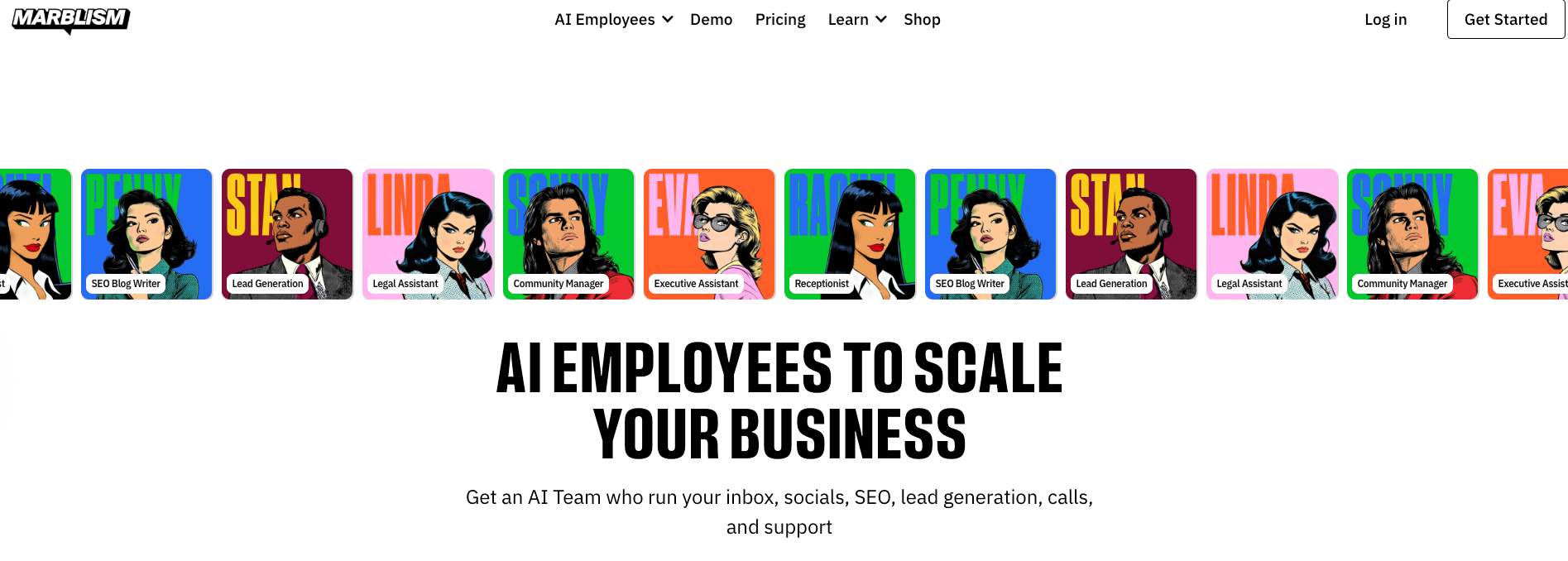
Marblism isn't a chatbot or just another AI writing tool. It's a platform that uses specialised AI Employees to handle specific tasks in your business.


Let me break that down.


Instead of you or your team sorting emails, drafting social posts, writing blog content, or researching leads, you can assign these tasks to AI Employees. They handle the work around the clock without needing supervision.


Think of it like this: you wouldn't hire one person to do sales, marketing, admin, and customer service. You'd hire specialists. Marbilism works the same way. You get:


  • Eva – An executive assistant who manages your inbox, flags priorities, and drafts replies
  • Sonny – A social media Manager who plans content calendars and adapts to your brand tone
  • Penny – A blog writer who researches topics and writes long-form content (and yes she did write this blog)
  • Plus specialists for lead gen, outreach prep, research, and more


Each one is trained for what it does best. And here's the kicker: they integrate with Gmail, Outlook, Instagram, Facebook, LinkedIn, X (Twitter): all the platforms you're already using.


No onboarding. No payroll. No, "I'm off sick today." Just consistent output at a fraction of the cost of hiring.


Speed to Market: The Real Competitive Edge


If you're running a business you already know the game: whoever moves fastest wins.  With traditional development, it can take weeks or even months to build custom workflows. By the time your system is ready, you might miss out on new opportunities.


Marblism changes that. You can set up an AI Employee in minutes instead of months. That means you can reply to leads in 10 minutes instead of 10 hours, and publish content weekly instead of quarterly.


The businesses that are winning today aren't the ones with the biggest budgets. They're the ones moving faster than their competitors.


The Integrated Ecosystem: Relay.app and Marblism


Here's where it gets interesting.


Marblism handles the execution layer: writing, researching, managing inboxes, and creating content. But productivity isn't just about doing tasks. It's about connecting systems so information flows without you having to lift a finger.


That's where Make.com and Relay.app come in.


Relay.app is the backbone of your automation. It connects your apps and services. For example, when a lead fills out a form on your website, it updates your CRM, sends a Slack notification, and starts a follow-up email sequence automatically. No manual data entry. No more forgetting to log things.


Relay.app lets AI make decisions within automations. For example, it can route emails based on sentiment, prioritize tasks as needed, or trigger workflows based on context instead of just following strict rules.


When you use all three together, you're not just automating tasks. You're building a smart operations layer that adapts, learns, and works without constant oversight.


The Productivity Pyramid: Where Your Time Actually Goes


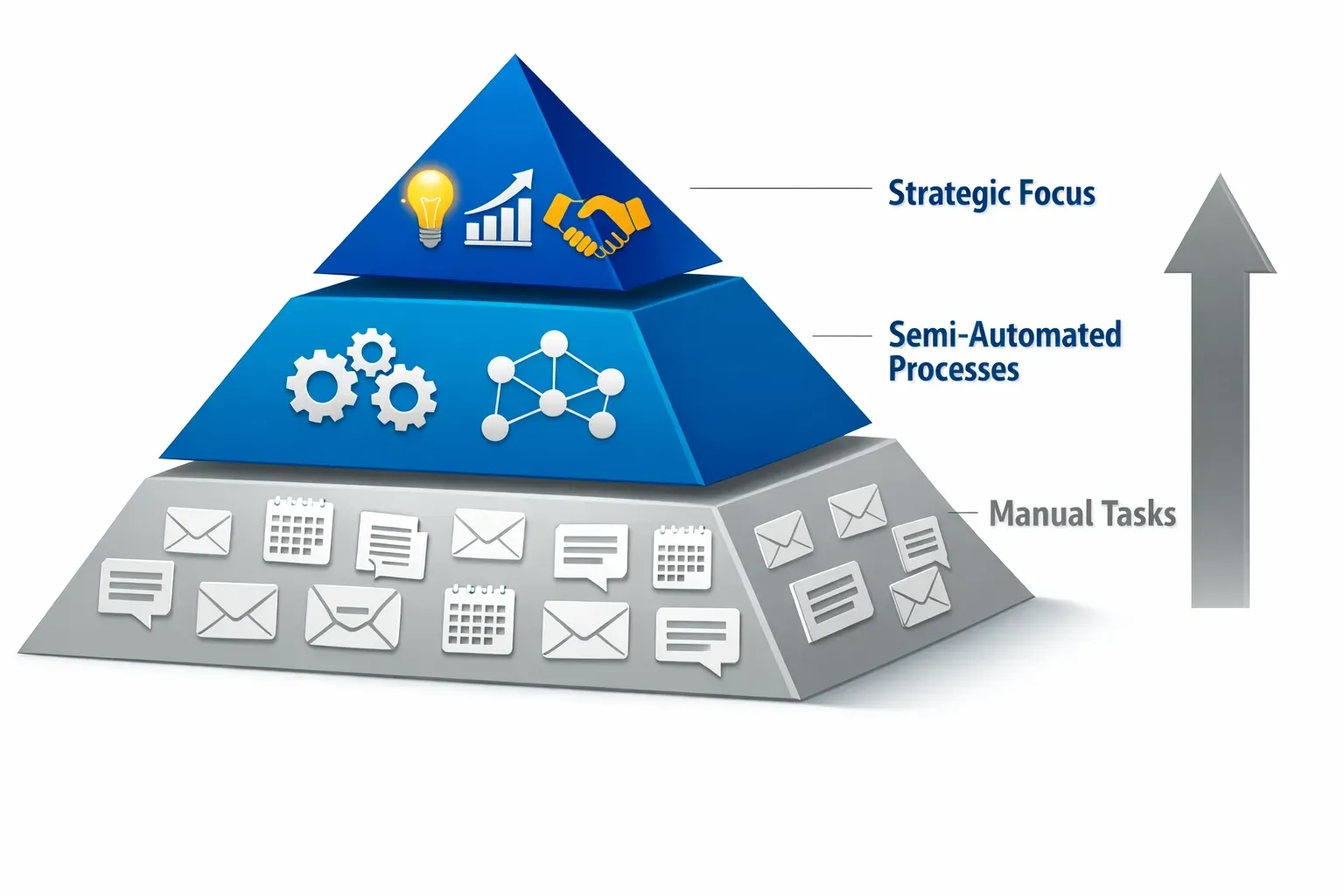
Most business owners spend 60-70% of their time on low-value admin work like managing their inbox, scheduling, following up on leads, posting on social media, and writing proposals.


That's not a strategy. That's maintenance.


The businesses that scale invert the pyramid: spending 70% of their time on high-level strategy, client relationships, and revenue-generating activities, while AI and automation handle the rest.

Here's what that shift looks like in practice:


Bottom layer (Manual grunt work): Inbox triage, data entry, content scheduling, basic research


Middle layer (Semi-automated workflows): Lead follow-ups, CRM updates, social media posting


Top layer (Strategic focus): Client strategy, partnerships, product development, creative direction

Marblism and the AI stack move the bottom two layers into the background. You're not getting rid of work; you're shifting your focus to what matters most.


Real-World Use Case: What This Looks Like in Practice


Let's say you run a web design agency. You've got a handful of clients, a few leads in the pipeline, and about 40 hours a week to make it all happen.


Here's my old routine:


  • Spend 90 minutes clearing your inbox.
  • Draft three social posts for the week.
  • Research blog topics, write content, and schedule it.
  • Follow up manually on my live leads.
  • Update CRM after every client call.


Sound familiar?


Here's my new routine’ now I have implemented Marblism and Relay:


  • Eva triages your inbox overnight, flags urgent items, and drafts replies to common questions.
  • Sonny plans your content calendar for the month and adapts the tone based on engagement.
  • Penny researches trending topics in your niche and drafts blog posts for review.
  • Relay.app automatically logs client calls to your CRM and triggers follow-up sequences.


You wake up, check what's been done, spend 30 minutes on approvals, and then use the rest of your day for real client work and strategy.


Oh, and I only rarely work at weekends


That's the difference between surviving and scaling.


Why This Matters for Credibility (And Why I'm Sharing This)

I'm not here to sell you software. I test AI tools all the time because my clients' results depend on staying ahead of what really works, not just what's popular on LinkedIn.


Marblism is one of the few platforms I've integrated into my own workflows at Overt Digital Media. It's genuinely shifted how we operate, particularly around content creation and client communication.


If you want to try it, here's my referral link: Explore Marbilism. To be transparent, I get a small reward if you sign up, but I'd recommend it anyway. It's cheaper than Netflix and much more useful.


AI Video Creation: Weekly Credibility Without Weekly Video Budgets


Video is a massive leverage point for credibility and engagement. People in Dorset/Christchurch don’t want another brochure-style website or another “we’re great at what we do” post. They want to see you. Hear you. Get a feel for whether you’re legit before they enquire.


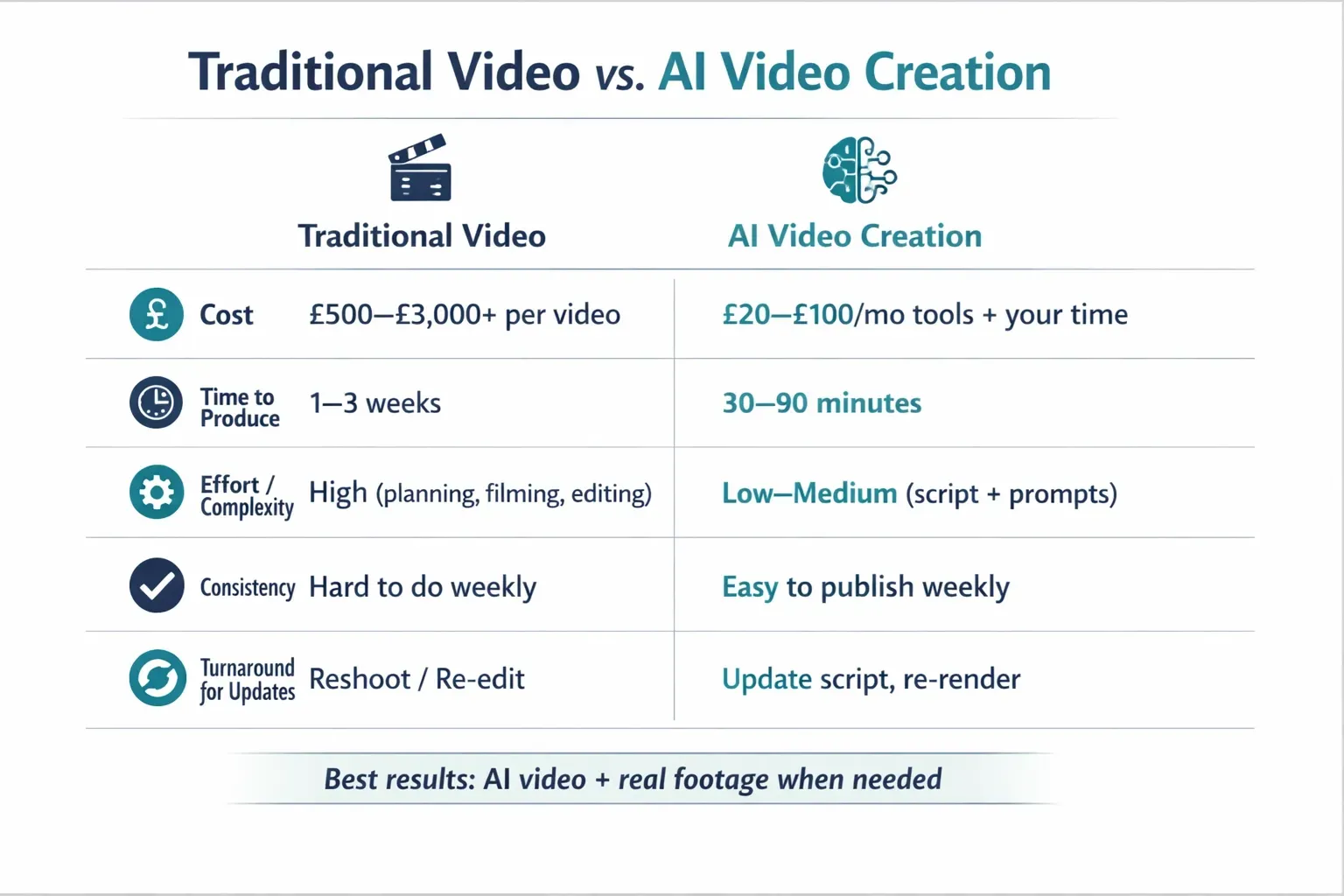
The problem? Traditional video is a pain.


If you’ve ever tried to “do video properly” you already know the blockers:


  • Time: planning, filming, editing, revisions… it eats days
  • Cost: a decent shoot + edit can easily run £500–£3,000+ per video
  • Consistency: you might manage one good video, but weekly? Not a chance


That’s why most small businesses never build momentum with video. Not because video doesn’t work. Because it’s too expensive to do often enough to matter.


This is where AI video tools remove the bottleneck.


Tools like HeyGen, Synthesia, and Descript let you produce polished videos without needing a crew every time:


  • Turn a script into a talking-head style video (with an AI presenter if you want)
  • Clean up audio, remove filler words, and tighten edits fast
  • Create multiple versions for different services/locations/offers in the time it used to take to edit one cut


You’re not using AI video to “fake” your business. You’re using it to ship more content, more consistently, without burning half your week.

Practical ways you can use AI video right now:


  • Weekly FAQ videos (“How much does it cost?”, “How long does it take?”, “What’s included?”)
  • Service explainers for landing pages (keeps visitors engaged longer)
  • Review-to-video repurposing (turn your best reviews into quick social proof clips)
  • Offer videos for seasonal promos (update the script and re-render in minutes)


If you can publish one solid video a week, you’ll look like the most active, most credible option in your market. That’s not branding. That’s a competitive advantage.


>>>Find out more about how AI Video Generation can help your business<<<
The Bigger Picture: AI as a Core Operation, Not a Side Tool


The businesses that win over the next five years won't be the ones with the most employees. They'll be the ones with the most intelligent operations.


AI isn't here to replace your team. It's here to help you and your team do more. It lets you compete with agencies ten times your size because you can work at their speed without their extra costs.


This isn't just theory—it's happening right now. The real question isn't if AI will change productivity, but whether you'll adapt before your competitors do.


Final Thought: Stop Managing Tools, Start Building Systems


If you're still doing the same tasks by hand every week, you're not really running a business. You're just managing a very expensive to-do list.

Switching to AI-based workflows isn't about learning to code or becoming a tech expert. It's about seeing where your time matters most and automating everything else.


Marblism, Make, and Relay aren't magic solutions, but they're the closest we have to giving small businesses the power of an enterprise without the high costs.


You don't need anyone's permission to get started. You just need to stop waiting.


Want to understand more about how AI can help scale your business?


Just complete the form below and one of the team will be in touch


Contact Us

By Jon Richardson May 18, 2026
How to Choose the Right AI Agency for your business The AI gold rush is in full swing. Spend five minutes on LinkedIn or at any networking event, and you’ll see plenty of AI consultants. That’s the problem. Every agency is suddenly an "AI agency." Every consultant is an "AI expert." Strip away the buzzwords, and most business owners are left asking a very fair question: What am I actually paying for here? If you're thinking about bringing AI into your business, and you should be, you’re probably not looking for something flashy. You want less admin. Fewer repetitive jobs and more time for the work that actually matters. That’s really what this comes down to. The right partner helps you get time back. The wrong one gives you an expensive toy you won’t use. So if you're trying to work out who actually knows their stuff and who’s just rebranded last week, here’s how to tell. 1. Don’t be blinded by the technology The biggest mistake you can make is hiring someone who talks about technology before they understand your business. You’ve probably heard the pitch before. We can install this clever tool. We can build that smart assistant. Fine. But if they haven’t asked how your enquiries come in, where jobs get stuck, or what your team keeps doing manually every single day, they’re guessing. A good partner starts with questions like: "What happens with inbound leads?" "Where do things slow down?" "What are you doing several times per day?" "What takes up time and headspace for no good reason?" That’s the real starting point. Not the software. Not the demo. Not the dramatic promises. If they can’t clearly explain why something will make your day easier, save your team time, or remove a bottleneck, it’s probably not the right fit. If getting a few hours back each week sounds useful, get in touch, and we’ll help you spot the obvious time drains. 
By Jon Richardson April 11, 2026
Let’s be honest: you’re probably tough to contact That’s not a criticism. It just means you’re successful. Whether you’re a solicitor in Christchurch, a high-end salon owner in Bournemouth, or a trade specialist in the New Forest, you’re busy, in meetings, on-site, and focused on the work that keeps your business running. Here’s the issue: while you’re focused on your work, you’re missing new opportunities. When a contact form goes unread for hours, or a call goes to voicemail, you’ve effectively lost that lead you have worked so hard for. In today’s world, the fastest responder wins—not just the one who offers the best service. If you slow your sales process, you could lose leads before you even speak with them. The Brutal Reality of "Speed to Lead" People expect quick answers. If someone in Bournemouth needs a service at 7:35 PM on a Saturday, they want their problem solved right away or at least to know that someone will help as soon as possible. Your chances of converting a lead drop by 80% if you wait more than ten minutes to respond. By the time you finish a coffee or a client call, your lead may already have contacted someone else. If you’re not the first to answer or reply, you risk losing out. Today’s customers see slow responses as unreliable. If you take two days to respond to a quote request, they might think the whole job will take much longer. The Manual Bottleneck: Why You Are the Problem Most business owners we meet at Overt Digital Media value their personal touch. They like to answer emails themselves and to be the voice on the phone. But this approach may slow your growth. Think about your current process: A potential customer fills out a form on your website. An email notification lands in your inbox (among 50 other emails). You see it 45 minutes later while grabbing lunch. You tell yourself, "I'll reply when I get back to the office." You get back to the office, get distracted by an urgent issue, and finally reply at 6:00 PM. By 6:00 PM, that lead has already booked a consultation with another s eo agency in Christchurch or a different local provider who has a system in place to catch them instantly. Manually following up is tiring and inconsistent. It often makes you switch tasks, breaking your focus and lowering productivity. You end up doing admin work for free and missing out on income. Enter the 24/7 Gatekeeper: The AI Receptionist The most common problem is missing phone calls. You might be on another call, driving, or simply taking a break from work. Voicemail rarely works for leads. Fewer than one in ten people leave messages; most just hang up and call someone else. This is where an AI Receptionist comes in. Unlike a traditional answering service, which just takes a name and number. An AI receptionist can actually handle the inquiry. It can answer questions, qualify leads, and even book an appointment directly in your calendar. Picture a client calling your business at midnight. Instead of no going through to voicemail, they reach an intelligent assistant who answers their questions and books a meeting for Monday morning. You wake up to a full calendar, and your client feels confident. This is how you stay ahead without answering every call yourself. Book a demonstration of our AI Receptionist
By Jon Richardson March 23, 2026
Is your business closed after 5? - The cost of operating 9-5 in a 24/7 world
By Jon Richardson February 15, 2026
Stop Paying for Marketing That Doesn't Work: A Simple Guide to Getting More Enquiries We have all been there, £2000 spent and no calls! You hand over thousands of pounds to someone who promises to "get your website to the top of Google." A few months pass. Maybe you get a fancy report every month. But when you check your phone? Silence. No calls. No enquiries. No new customers walking through the door. It's the single most frustrating problem facing small business owners. You're working flat out, doing a brilliant job for your customers, but the marketing side feels like throwing money into a black hole. The truth is, most marketing doesn't fail because it's poorly done. It fails because it's not focused on the right goal, i.e. making your phone ring. Why Your Marketing Budget Disappears Without Results Let's be honest about what usually happens when small businesses try to market themselves. Someone sells you on Facebook ads. You spend £50 a day for a month. You get hundreds of clicks, maybe thousands of "impressions" (whatever those are). The report looks impressive. But you can count the actual enquiries on one hand, and half of them are time-wasters. Or maybe you paid for a fancy website redesign. It looks gorgeous. Your mate said it's "really professional." But six months later, you're still getting the same trickle of enquiries you had before. The issue isn't that these things never work. The real problem is they're often sold as if they're the whole answer, when they're just part of the bigger picture. You don't just need more website visitors; you need more people calling you or filling out your contact form. ​ Most marketing agencies make their money from monthly retainers and big upfront fees. They're incentivised to keep you paying, not necessarily to get you results. That's not a conspiracy theory: it's just the way the industry works. What Actually Brings In Enquiries (Without Breaking the Bank) Now, let's look at what actually works for real businesses serving real customers. Make It Stupidly Easy to Find You When someone searches "plumber near me" or "accountant in Bournemouth," you want to show up. Not necessarily with a paid ad: with a proper listing that shows you're local, legitimate, and available. Your Google Business Profile is free. Completely free. Yet most small businesses either don't claim it or leave it half-finished. Make sure yours has: Your actual phone number (not just a contact form) Current opening hours Recent photos of your work or premises Responses to any reviews, good or bad This one step brings in more quality enquiries than most paid ads, because people searching are already interested in your services. You're not interrupting them; you're providing the answer they need.
By Jon Richardson February 1, 2026
Google Business Profile - Your Free & Secret SEO Tool
By Jon Richardson January 13, 2026
Why updating your Google Business Profile is a genuine no-brainer for local businesses.
By Jon Richardson January 3, 2026
The one question most small business owners are asking themselves: How can AI help my Business?
By Jon Richardson December 7, 2025
Struggling for leads? 10 quick SEO secrets, UK agencies don't want you to know. Your competitors are getting all the leads while you're struggling to get noticed online. Sound familiar? Here's the truth most digital marketing agencies in Christchurch don't want you to discover: local SEO isn't rocket science, and you don't need a computer science degree to make it work. Most agencies overcomplicate things on purpose – it keeps you dependent on their services. But the reality is that small tweaks to how you present your business online can dramatically increase the number of local customers finding and choosing you over your competition. Let's break down the exact strategies that work, explained in plain English. Secret #1: Stop Fighting for "Plumber" – Win "Emergency Plumber Christchurch" Instead Forget trying to rank for broad terms like "plumber" or "electrician." You're competing against every business in the UK for those keywords. Instead, focus on what people actually type when they need your services urgently. Think like your customers. When someone's toilet is overflowing at 2am, they're not searching for "plumber." They're typing "emergency plumber near me" or "24 hour plumber in Christchurch, Dorset." What to do right now: Make a list of your services, then add your suburb or area to each one. Use these phrases naturally throughout your website content, especially on your main pages. Secret #2: Create Landing Pages for Each Area You Serve This is where most small businesses miss out on massive opportunities. Instead of one generic "Services" page, create separate pages for each suburb or area you work in. For example, if you're a carpet cleaner, don't just have one page about carpet cleaning. Create: "Carpet Cleaning in Highcliffe" "Carpet Cleaning in Christchurch" "Carpet Cleaning in Burton" What to do right now: Pick your top 3 service areas and create dedicated pages for each. Include local landmarks, mention the specific challenges customers in that area face, and use photos from actual jobs in those neighbourhoods. Secret #3: Your Google Business Profile is Your Secret Weapon Your Google Business Profile (formerly Google My Business) is often the first thing potential customers see. Yet most businesses treat it like an afterthought. Here's what separates the businesses getting calls from those being ignored: Post updates at least once a week Respond to every review within 24 hours Upload new photos monthly Keep your opening hours religiously up to date Use the "Products" section to showcase your key services What to do right now: Log into your Google Business Profile today. Check every detail is correct, upload 5 new photos, and write a post about a recent job or customer success story. 
By Jon Richardson November 22, 2025
Why Local Businesses Are Moving Away from Directories - And Finding Bigger Wins with Google Business Profile
By Jon Richardson November 17, 2025
Networking for Trades - Good & Bad