turning website visitors into paying customers
Convert your website in a lead generation machine!
Introduction
Transforming website visitors into paying customers is the main reason small businesses pay significant amounts of money for web designers, copywriters and photographers. After all, if people are landing on your site and then wandering away without taking any action, you're missing a prime opportunity to grow your business. A website that doesn't generate leads is little more than a vanity project. That might sound blunt, but for small businesses in particular—where every single lead and sale counts—it's important to ensure your website is more than just an online brochure. In this blog, we'll explore how to convert your traffic into paying customers. As always, I will focus on practical steps and straightforward insights that won't baffle you with excessive jargon.
The Value of Conversion
"An average conversion rate of a website is around 9% however small business websites the figures average around 2-5%"
It's easy to get tunnel vision when you look at website stats. You might see the traffic numbers going up and think everything is great, but that's only half the story. The true measure of success is how many of your visitors actually do something valuable for your business, such as requesting a quote, signing up for your newsletter, or making a direct purchase. At the risk of stating the obvious, increasing your conversion rate will increase revenue. For example, raising conversions from two in every hundred visitors to three in every hundred might not sound like a big leap, but that's actually a 50% increase. It can be the difference between hitting your monthly targets and falling behind.
You may need to consider a structured review from an expert if your site isn't turning interest into engagement or sales. That could start with a simple (Marketing Review) to get a snapshot of your overall strategy. Once you pinpoint the weak areas, you'll have a clearer idea of how to move forward. And remember, the digital world moves quickly—your content and design should be reviewed thoroughly at least once a year. If your website hasn't been updated for a while, it likely doesn't reflect your business as it is today, and it's not going to be delivering as many leads as it otherwise could.
Streamlined User Experience
"53% of smartphone users will leave a website if it is not optimised for mobile, underscoring the need for responsive design."
The user experience is often where a conversion journey either thrives or falls flat. When people arrive on your site, their first few seconds are critical. If they find it cluttered, confusing, or painfully slow to load, they'll probably leave and never return. You wouldn't set foot in a messy shop and expect a pleasant browsing experience, so why should your online presence be any different?
One of the biggest missteps is failing to cater for the variety of devices people use. A few years ago, having a mobile-friendly site gave you an edge over competitors. Now, it's the baseline expectation. If your site doesn't adjust fluidly to different screen sizes and run smoothly on smartphones, you'll quickly lose potential customers. Making sure your pages load quickly is equally vital. Each second of delay can result in a drop in conversions, especially among visitors who are casually browsing and unlikely to wait. If you're unsure about how your site stacks up, it might be time for a (Website Audit). A review of your website by an expert using technology like InSites, SE Ranking or SEMRush can highlight issues with your site's performance, pinpoint broken links, and suggest ways to make your content more accessible.
Persuasive Calls to Action
A call to action, or CTA, is the crucial element that encourages visitors to take the next step. This could be subscribing to your newsletter, downloading a guide, or requesting a quote. It might be tempting to place a generic "Click Here" button somewhere on the page, but clarity and relevance are what drive clicks. For instance, if you run a local plumbing service, a CTA like "Get an Instant Quote on Your Repair" is more compelling than "Click Here to Learn More." It spells out exactly what the potential customer gets by taking action.
Think about where visitors are most engaged. If they've just read a compelling piece of content about how your service solves their problem, that's the time to invite them to take the next step. Your CTA should stand out visually, but it also needs to align naturally with the page content.
This is where some testing comes into play. You can discover what your audience prefers by experimenting with different calls to action, such as click-to-call or click-to-email buttons, forms, WhatsApp widgets, etc. If you want a deeper dive into how people engage with your site, consider an (SEO Audit), which will help identify not just traffic levels but also the areas of your site that might need a stronger call to action.
Some popular CTA's include
- Book an appointment
- Call now
- Send us an email
- Visit our shop
- Buy Now
- Sign up to our Newsletter
- Share this Blog
- Form completion
Artificial Intelligence and Website Design
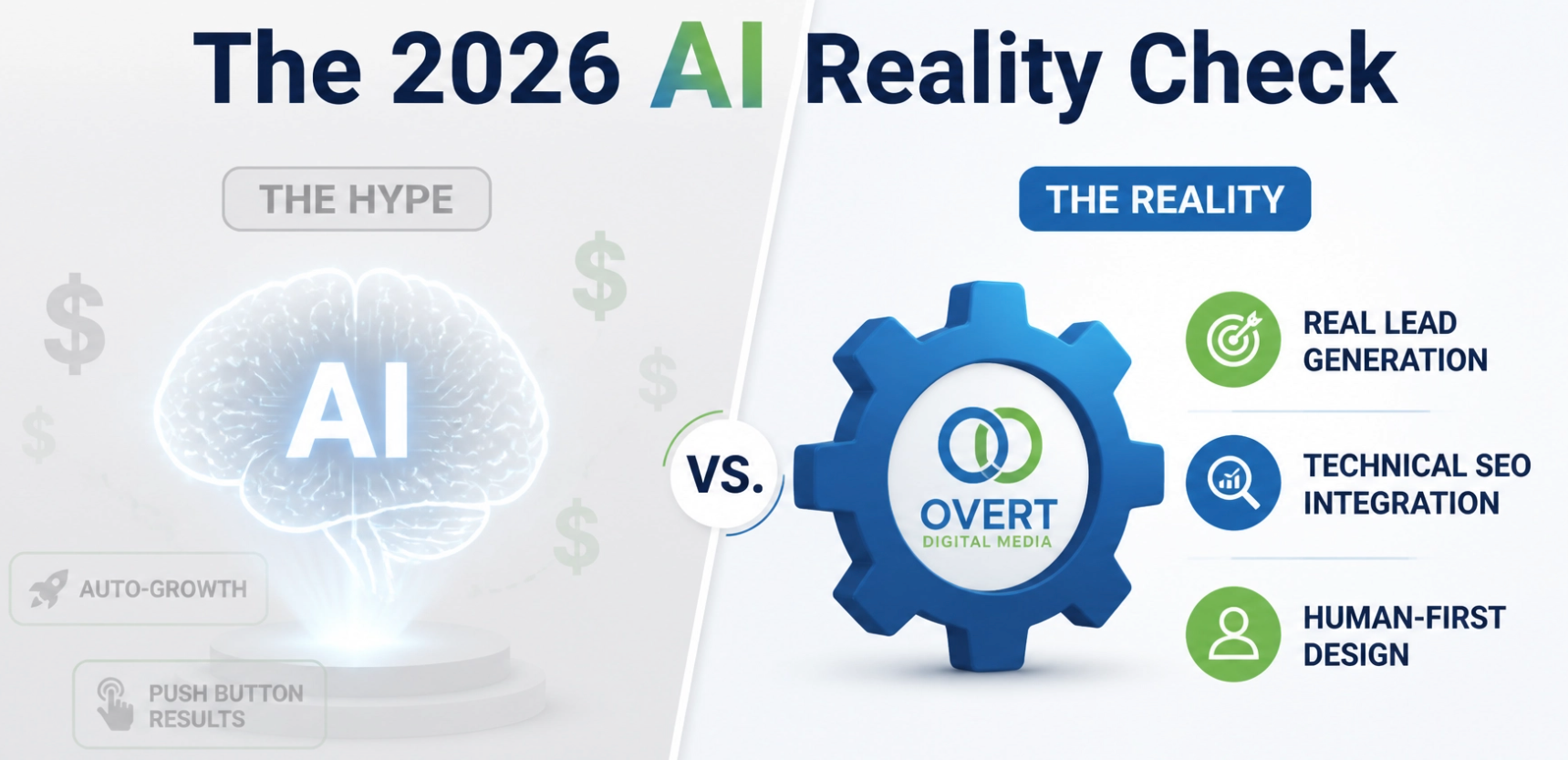
AI is making it far easier to keep websites up-to-date and relevant. By analysing user behaviour and pulling in real-time data—such as time of day, location, device type, or even how many times someone has visited—AI-driven tools can automatically tailor your site's content to the individual user. This means your visitor in London at lunchtime might see a different headline or special offer than your visitor in Manchester late at night. It's not about tricking people; it's about delivering the content they're most likely to find engaging and valuable in that moment.
When it comes to converting casual visitors into paying customers, these personal touches can really shift the needle. Some studies suggest that automated personalisation of content can increase the number of leads and customers your website generates by as much as 19%. That's a meaningful lift for any business, especially small ones. Think about it from a consumer's perspective: if a website immediately understands your needs based on your device or browsing habits, you're far more likely to feel that the brand is speaking directly to you.
AI doesn't stop at the surface-level tweaks, either. It can also help you spot when content is stale or a specific page is consistently underperforming. With the right setup, these technologies can trigger alerts to review sections of your site or even generate new content ideas based on trending topics. That's a win because I firmly believe websites should be updated frequently—at least monthly, if not more. If you'd like to explore how AI and automated personalisation can improve your conversion rates, consider booking a (Website Audit) or a (Marketing Review). Once you see the potential for more targeted content, you'll wonder why you relied on a one-size-fits-all approach.
>>>Find out more about A.I Websites and how it can increase your revenue
Trust Signals and Social Proof
"90% of people read online reviews before visiting a business, underlining the importance of trust signals."
Even if your website is beautifully designed and easy to navigate, some visitors will still hover on the fence unless they see proof that your business is reliable and trustworthy. Reviews, testimonials, and case studies from real customers are incredibly effective. These elements act as trust signals, giving potential clients the confidence that you can deliver on your promises. If people feel safe and assured, they're far more likely to move forward and purchase, sign up for your service, or at least ask for more information.
Other trust-building indicators include security badges that show you have a valid SSL certificate and clear policies that explain shipping, returns, or refunds if you sell products. For services, a dedicated "About" page that briefly introduces the team and your company values can also encourage trust. Remember, people connect with people, not faceless brands. Particularly when you're a small business, there's a real advantage in showing the human side of what you do.
Engaging Content and Messaging
One of the biggest mistakes is writing website content without doing any keyword research. That often results in articles that might read nicely but don't reflect the words and phrases your audience is actually searching for. If you're trying to attract local customers, you need to speak their language, addressing their specific needs while naturally weaving relevant search terms into your text. This ensures that when people look for solutions online, your site has a better chance of appearing in their results.
However, you must balance your attempts to optimise your website with readability. You'll put readers off if your pages are stuffed with keywords or feel overly robotic. Instead, focus on clear, concise messaging that addresses the pain points of your target audience. Show them how your product or service solves a real problem. In short, write in a way that will appeal to the actual humans reading the content.
Every small business should update its website content at least monthly. That might mean adding new blog posts, tweaking your homepage, or adjusting service descriptions based on feedback from real customers. If you haven't updated your site in months, it's time to refresh. If you're worried about choosing the right keywords or if your content is helping you rank, an SEO Audit is often the best place to start.
Lead Capture and Follow-Up
Some visitors aren't ready to buy immediately, so having a lead capture strategy is essential. A contact form or newsletter signup can start that relationship. But just slapping a contact form at the bottom of a page won't cut it if you don't remind people to use it. Incentives like free resources or access to exclusive updates can encourage signups, so long as they're relevant. For instance, a roofer might offer a quick guide on "Top Signs You Need a Roof Inspection," while an accountant might give away a simple budget planner.
Handled well, they can capture a visitor who is about to disappear forever. After that, you need a follow-up plan. An email sequence that showcases your top case studies or frequently asked questions could nudge your lead closer to hiring you. And if you suspect your lead capture forms aren't working correctly—or at all—a Website Audit can quickly root out any technical snags.
>>>Request your website Audit here
Lead Magnets
Lead magnets are an excellent way to convert casual browsers into genuine leads by offering them something of real value in exchange for their contact details. Think of it as a win-win arrangement: your potential customer gets an immediate benefit that addresses a pressing need or question while you gain the opportunity to start a more meaningful conversation with them. Whether it's a free guide, a downloadable checklist, a discount code, or an exclusive webinar, the key is ensuring that what you're offering is relevant and solves a problem your audience cares about.
For small businesses, lead magnets can be especially powerful. You don't need a colossal content library—just one or two well-crafted pieces that genuinely resonate with your target market. For example, as a website design and SEO agency, we offer free website and SEO audits. These provide a lot of value to our prospective customers as they provide actionable insights on how you can outperform your competitors on the web. While they do cost us time and money, they are a valuable source of leads for us.
It's important to treat your lead magnet as a living, evolving asset. Update it regularly with fresh information or new insights, and don't be afraid to experiment with different formats to see what resonates best. If you find a particular magnet isn't generating the response you hoped for, it might be time for a deeper analysis—such as a (Marketing Review) or (Website Audit)—to help you identify any underlying issues and get your lead generation strategy on track. The ultimate goal is to establish trust and show potential customers exactly why they should choose your business over anyone else.
Testing, Tracking, and Improving
Conversion optimisation isn't a one-and-done activity. You need to keep testing and measuring. Tools like analytics dashboards can help you identify where people drop off your site. Google Analytics can tell you if your homepage has a significant bounce rate or if your pricing page loses them. Once you know where the problem is, you can run experiments to solve it. Try adjusting your headline, adding a testimonial, or simplifying a form. If you see improvements in conversions, that's a change worth keeping.
The danger for a lot of small businesses is the set-it-and-forget-it approach. I often see websites built for a single moment in time, never to be updated until they look undeniably old-fashioned. That's a missed opportunity. Updating and refining your website monthly (or more often) means you stay in tune with what your customers need and what the market is doing. And if you really want to step up your efforts, combine these refinements with an ongoing plan to bring in new visitors. It's no good having a top-notch site if nobody sees it. Ignoring search engine optimisation or pay-per-click campaigns is a mistake. Digital marketing is a zero-sum game. If you are losing customers because your website is not being found, then your competitors are gaining customers. This, in turn, gives them more money to spend on marketing and attract more customers, pushing you further to the margins.
Wrapping Up and Next Steps
Turning visitors into paying customers is not about pulling a single marketing lever or making one tweak. It's a combination of good user experience, clear messaging, trust-building, and regular measurement.
For small businesses especially, each visitor is a chance to expand your customer base. If your website doesn't guide those visitors toward conversion, you risk leaving money on the table. Your website, like your business, is never finished. It is a constantly evolving thing. When properly maintained, it can work tirelessly on your behalf, generating leads day and night.
If your website hasn't been updated or reviewed recently, now is the perfect time to take action. Book a (Marketing Review) to see where you stand overall, or if you don't have the time to focus on a full marketing review, then consider a more focused Website Audit to uncover any design and technical issues.
If your biggest challenge is visibility, then an (SEO Audit) can help you figure out why you're not showing up when customers search for what you offer. Whichever route you choose, remember that a solid digital presence doesn't happen by accident. It takes thoughtful effort and routine evaluation to keep your site performing at its best.
There's no one-size-fits-all formula, but if you keep the fundamental principles in mind—know your audience, simplify their path to conversion, build trust, and always review and improve—you'll see tangible results. Even small, steady changes can significantly impact your bottom line, turning casual browsers into loyal, paying customers. By treating your website as a living asset rather than a forgotten online brochure, you'll get more leads and customers. If you're ready to take the next step, schedule one of our audits today and learn how to level up your site's performance.
We have seen customers significantly boost sales and rapidly grow after implementing the insights highlighted in our marketing reviews. The sooner you focus on conversion, the sooner your website can deliver real value to your business.
If you would like a full marketing audit, you can do so by completing the for below:
Request my free marketing audit