Will AI replace SEO
The Future of Search Engine Optimisation: Transitioning from Traditional SEO to an AI-Driven Era
Will SEO Be Replaced by AI? - This is the question I am hearing more and more often!
Introduction: The AI Disruption in Search
AI tools such as ChatGPT, Perplexity, Deepseek and Sintra.ai are changing how we search for information online. AI-powered tools offer quick answers without the need for a click. This trend has many business owners wondering if traditional search engine optimisation (SEO) is on its way out. In my view, AI is already replacing many aspects of what we call SEO—especially for informational searches. However, Google remains the go-to source for local and commercial queries, where trust and personal connections are vital.
We are witnessing the birth of a new search landscape. Over time, the techniques and strategies we currently call SEO will evolve. Today's best practices may soon be replaced by optimisation for AI engines. But before we get ahead of ourselves, let's explore exactly how AI is changing search and what that means for your business.
How AI Is Changing Search
AI is already making its mark on how search engines process and display information. One of the biggest changes is that search engines now generate their own answers, pulling data from many sources. This means that for basic informational searches—like "How does solar power work?"—users might receive a neat summary without clicking through to a website. This is clear evidence that AI is set to replace the old model of SEO for these types of queries.
AI is also stepping into the arena of content creation. Tools like ChatGPT, Perplexity and Deepseek can generate text quickly and efficiently. While these tools are great for drafting ideas or even full articles, I believe they serve best as a supplement to human creativity rather than a full replacement. Fully AI-generated content lacks the depth that comes from real human experience. However AI can help to significantly improve your content.
In short, AI is streamlining the search for general information. It offers quick, digestible answers that sometimes bypass the need for a website visit. Yet, when it comes to local and commercial queries, the search landscape is more complex, and Google still holds its ground.
Why SEO Isn't Going Anywhere (Yet)!
Despite the surge of AI technologies, SEO is far from dead. It is, however, in a state of evolution. I firmly believe that while AI will eventually replace many of the tasks we currently associate with SEO—especially in handling informational queries—businesses cannot afford to ignore traditional SEO, particularly for local and commercial searches.
First, consider the quality of the content. AI-generated answers do not create new insights; they extract and summarise existing data. If businesses stop investing in quality content, AI will have nothing trustworthy from which to pull. This provides an opportunity for true experts who can create in-depth, authoritative content that AI tools will continue to reference.
Next, user behaviour still matters. Even with AI summarising content, many users click through to websites for further details, verification, or to complete a transaction. When it comes to commercial searches—where a user intends to buy a product or book a service—Google's traditional search results, local listings, and customer reviews remain critical. In my opinion, these areas will continue to be dominated by classic SEO strategies for the foreseeable future.
Finally, the human touch cannot be replicated entirely by AI. While AI can summarise facts, it lacks the personal experience, emotion, and nuance that someone with real-life experience can provide.
Businesses that showcase genuine expertise, real-life testimonials, and trusted advice are still highly valued by users and search engines alike.
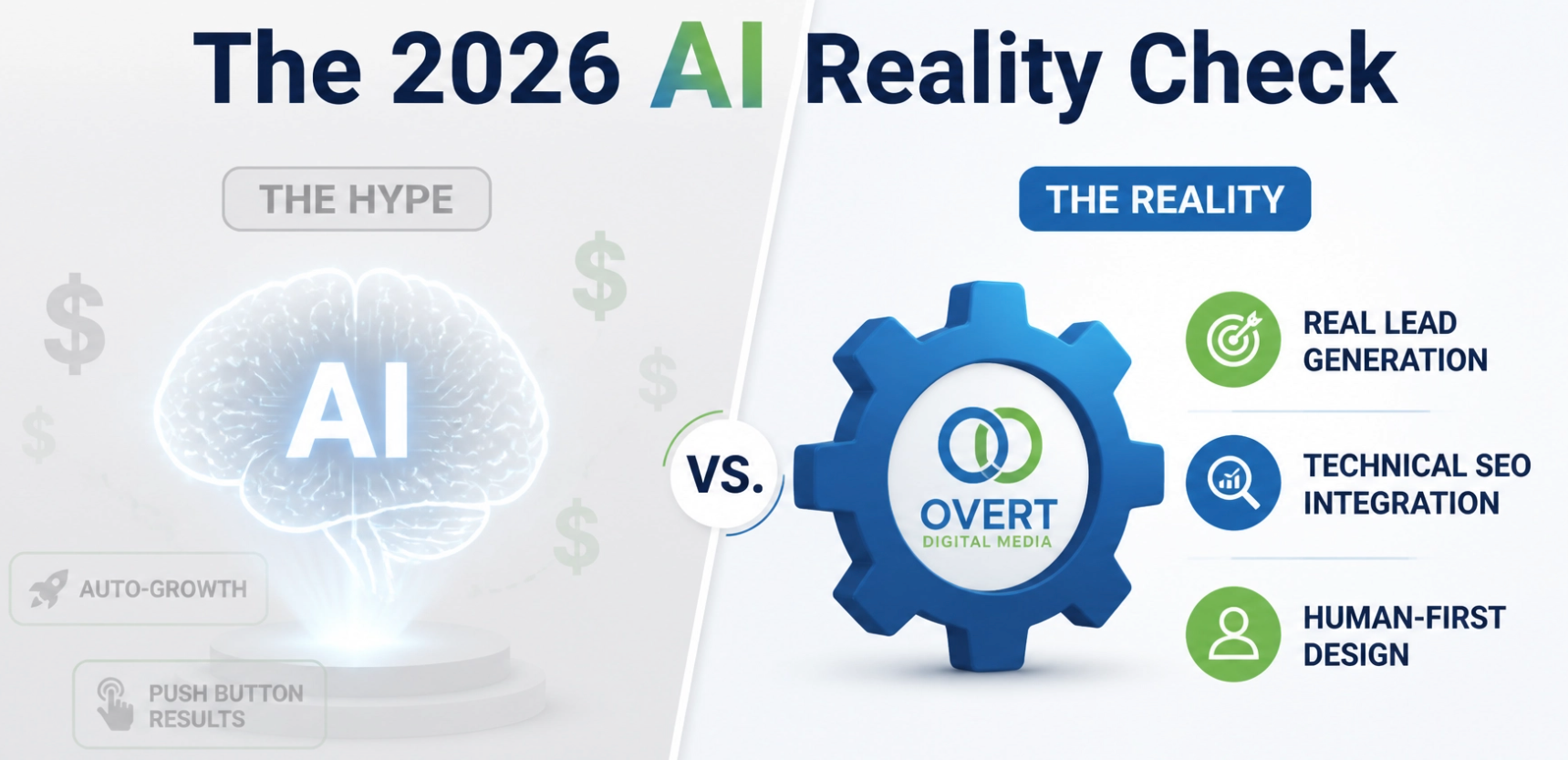
The bottom line is that AI is reshaping SEO but is not wiping it out. At Overt Digital Media, we are preparing for a time when AI will take over routine informational tasks while leaving local and commercial searches in the hands of proven, human-driven techniques.
The Different Types of Searches: Informational, Local, and Commercial
To truly understand the future of SEO, we need to look at the different types of searches users perform. Each type presents its own challenges and opportunities for businesses.
Informational Searches
These searches are when someone wants to learn something. They ask questions like "What are the benefits of solar panels?" or "How do I change a tyre?" AI has already begun to replace traditional SEO for these queries. By summarising information from multiple sources, AI gives users quick answers without the need to navigate multiple websites. In my view, this trend means that traditional SEO tactics focused solely on ranking for informational keywords may soon become less important.
However, there is still an opportunity here. Businesses that provide in-depth, well-researched content can still stand out when users seek more than just a quick summary. But they must add value that AI might miss.
By creating engaging content that offers clear, actionable advice, companies can remain relevant even as AI takes over the basic search functions.
Additionally, AI tools will reference sources and websites in their summaries. Businesses should focus on creating content that will be referenced in AI summaries.
Local Searches
Local searches are different. When someone types "best coffee shop near me" or "web designer in Christchurch," they expect results that are geographically relevant. This is where Google's local listings, driven by business profiles and reviews, play a crucial role. I believe local SEO is far more resilient to AI disruption because it is built on real-world, verifiable data like customer reviews, opening hours, and precise locations.
Businesses that serve a local audience must continue to optimise their local listings and maintain a strong local presence. AI may change how information is presented, but it cannot replace the human elements of trust and locality. This means that traditional local SEO remains indispensable for service-based and brick-and-mortar businesses.
See how local SEO can transform your rankings
Commercial Searches
Commercial searches are when a user is ready to purchase or hire a service. Queries like "affordable SEO in Christchurch" or "best web designer near me" signal a strong intent to buy by the searcher.
In these cases, having detailed product information, competitive pricing, and clear calls to action is key. Google's algorithms still lean heavily on these elements when ranking pages.
While AI may streamline the way information is presented for informational searches, the commercial aspect of search is less likely to change dramatically in the near future. Consumers still need to see trusted reviews, comprehensive service details, and a clear pathway to make a purchase. Therefore, brick-and-mortar businesses or those focused on a geographic area must continue investing in SEO.
Why Local SEO Is Still Important for Service-Based and Bricks-and-Mortar Businesses
Connecting with Your Community: Why Local SEO Remains Essential for Service-Based and Bricks-and-Mortar Businesses
Local SEO remains vital for service-based and brick-and-mortar businesses. In my view, local SEO is one area where traditional methods will persist even as AI transforms other parts of the search landscape.
Local SEO is all about making sure that your business appears when someone nearby is looking for a service you offer. Imagine you are searching for a nearby restaurant or a local hairdresser. Even if AI starts to summarise general information, it cannot (currently) replace the precise details provided by Google Business Profiles. These profiles show your location, opening hours, contact information, and customer reviews—all essential for attracting local customers.
Furthermore, many local searches are done on mobile devices. When you're out and about, you want a quick answer that tells you where to go. The Maps Pack is a visual representation of businesses that meet your search intent and tells you how well they are rated. It also provides an easy way to navigate to the business.
AI might offer some quick facts, but it won't replace the detailed local listings that drive foot traffic. From my perspective, local SEO is less likely to be overtaken by AI because it relies on up-to-date, location-specific data that AI engines must pull from trusted sources like Google's own local business listings.
In addition, local SEO builds community trust. Customer reviews and local testimonials carry weight in the decision-making process. Even if AI summarises information, potential customers will still look for social proof before deciding which service to use. Therefore, maintaining a strong local SEO presence is non-negotiable for businesses that rely on in-person or region-specific services.
How Businesses Can Adapt SEO for an AI-Driven Future
So, how should businesses adapt their SEO strategies?
Smart businesses will use AI as a tool to enhance their existing SEO efforts rather than see it as a threat. First, it's important to optimise the new AI-generated search engines like Gemini, ChatGPT, Sintra, and Perplexity.
This means creating content that is easy for AI engines to summarise. As with all content creation, it is important to use straightforward language and structure your content with clear headings and FAQs. This helps users and allows AI to pick up the most important information from your site.
The key takeaway here is to create content that your customers can easily read and understand.
Next, consider using AI tools to improve your own SEO efforts. Tools like ChatGPT are currently leading the way, but other models, such as Perplexity and Deepseek, are emerging. They can help with keyword research, content ideation, and even technical audits.
What AI engines do you need to optimise for?
This will vary depending on factors such as the type of search, geographic area, and user intent. It is not yet clear which model will dominate, so staying flexible and informed is important.
Another essential strategy is to prioritise building brand authority. Like traditional search engines, AI platforms rely on trusted sources. As part of your digital marketing efforts, you should invest in creating quality content, securing reputable backlinks, and encouraging positive customer reviews. By building a strong online reputation, you ensure that even if AI summarises content, it will still point back to your authoritative site.
Finally, don't put all your eggs in one basket; spread your efforts across as many platforms as possible. While SEO remains important, diversifying your marketing efforts is wise. Supplement your SEO with social media engagement, email marketing, paid advertising and even more traditional efforts such as networking, print advertising and cold calling.
The most effective marketing methods for your company will depend on your customers' personas. If you would like a free review of your marketing to identify the most effective marketing strategy for your business, please contact us using the form below.
Click here for more information regarding our free marketing reviews.
The takeaway here is that a multi-channel approach to your marketing ensures that even if one channel is affected by AI changes, you will still get a steady stream of leads from your other marketing efforts.
Request a free marketing review
Conclusion: AI Is Changing SEO, Not Killing It
To wrap up, AI is undoubtedly reshaping the world of search engine optimisation. AI is already replacing traditional SEO techniques for informational queries by providing quick, summarised answers.
This trend will continue as AI tools evolve further. However, for local and commercial searches, Google is still king. Local business profiles, detailed product pages, customer reviews, and precise geographical data are still key drivers of user decisions.
In my view, SEO as we know it will eventually be replaced by optimising for various AI engines. While ChatGPT currently leads the conversation, emerging models like Perplexity and Deepseek remind us that the future of search is not set in stone. The AI model you need to optimise for may differ based on the type of search, the geographic area, and the search intent.
My advice is to embrace change. Use AI tools to improve your content and SEO, but continue to build your brand and develop other sources of leads and customers for your business.
This will help you navigate the new AI-dominated landscape, ensuring your business remains visible, relevant, and competitive no matter which AI model comes to the fore.
The evolution of SEO into an AI-driven model offers many opportunities, provided you are prepared to adapt.
About Overt Digital Media
Overt Digital Media are a digital marketing agency based in Christchurch between Bournemouth and The New Forest. We specialise in building and optimising high performing websites that generate leads and sales for the companies they represent.
Our websites are built using the latest technology and incorporate AI to personalise both the content and the user experience. Research has shown that websites that adopt this approach can increase conversion rates by up to 50%.
As well as web design and search engine optimisation we also provide social media marketing and pay per click advertising for our customers.
Contact Us