Google Maps SEO Vs Local SEO
The best way to rank your website highly in your local area!
Local SEO vs. Google Maps SEO: What's the Difference and How Can They Work Together?
The business world has changed over the decades, much of which has been due to new technology. No bigger change has been witnessed than what we have seen in the last two decades with the introduction of search engines.
Initially, it was easy to get found online, but as the number of websites increased exponentially, it has become increasingly difficult, if not impossible, to be found on the web without investing in Ads or SEO. But in this digital arms race, innovation is required, especially when competing with much bigger organisations that have much deeper pockets.
So, how do you, as a small business, compete against a company with a much bigger marketing budget? One answer is Google Maps SEO!
Search engine optimisation (SEO) can be confusing, particularly regarding local search. Two terms that often come up are local SEO and Google Maps SEO. While they are interrelated, they represent distinct strategies with unique goals. This article will delve into the differences between local SEO and Google Maps SEO, explore how they work together, and provide actionable tips to leverage them for optimal local search success.
Whether your priority is attracting walk-in traffic or establishing yourself as a local authority in your industry, understanding the key tactics involved in both Google Maps SEO and Local SEO empowers you to unlock significant growth potential. By the end of this blog, you'll be equipped with the knowledge and actionable steps to take control of your local SEO strategy and watch your online visibility soar, ultimately attracting more customers and driving success for your local business.
Understanding Local SEO
Local SEO encompasses a comprehensive set of strategies to increase a business's visibility in local search results. Imagine it as building a strong, well-maintained building in a prime location. Local SEO focuses on factors influencing how a business appears in organic (non-paid) search results for location-specific searches. Here are some key aspects of local SEO:
- Keyword Research: Identifying relevant keywords that potential customers in your area are searching for, such as 'SEO agency near me' or 'Website Designer in Christchurch'. These keywords should include location qualifiers like "city" or "near me" alongside your industry terms.
- On-Page Optimisation: Optimise your website content, including Page Headings, title tags, meta descriptions, and local landing pages, to incorporate these location-specific keywords.
- Google My Business (GMB) Optimisation: Claiming and optimising your Google My Business profile with accurate and up-to-date information like address, phone number, category listings, and high-quality photos.
- Local Citations: Building citations, which are listings of your business name, address, and phone number (NAP) in online directories and websites such as yell.com and free index, etc. Consistency in NAP citations across platforms is crucial.
- Positive Online Reviews: Encouraging satisfied customers to leave positive reviews on Google, Trustpilot, Checkatrade and other relevant platforms. However, Google reviews should be your priority as they significantly impact your SEO rankings. Responding to both positive and negative reviews demonstrates professionalism and builds trust.
Local SEO strategies create a robust online presence that search engines can easily understand and rank favourably for local searches.
Google Maps SEO
Google Maps SEO, sometimes called Map Pack SEO, focuses specifically on improving a business's ranking and visibility within the Google Maps platform.
What is the Map Pack?
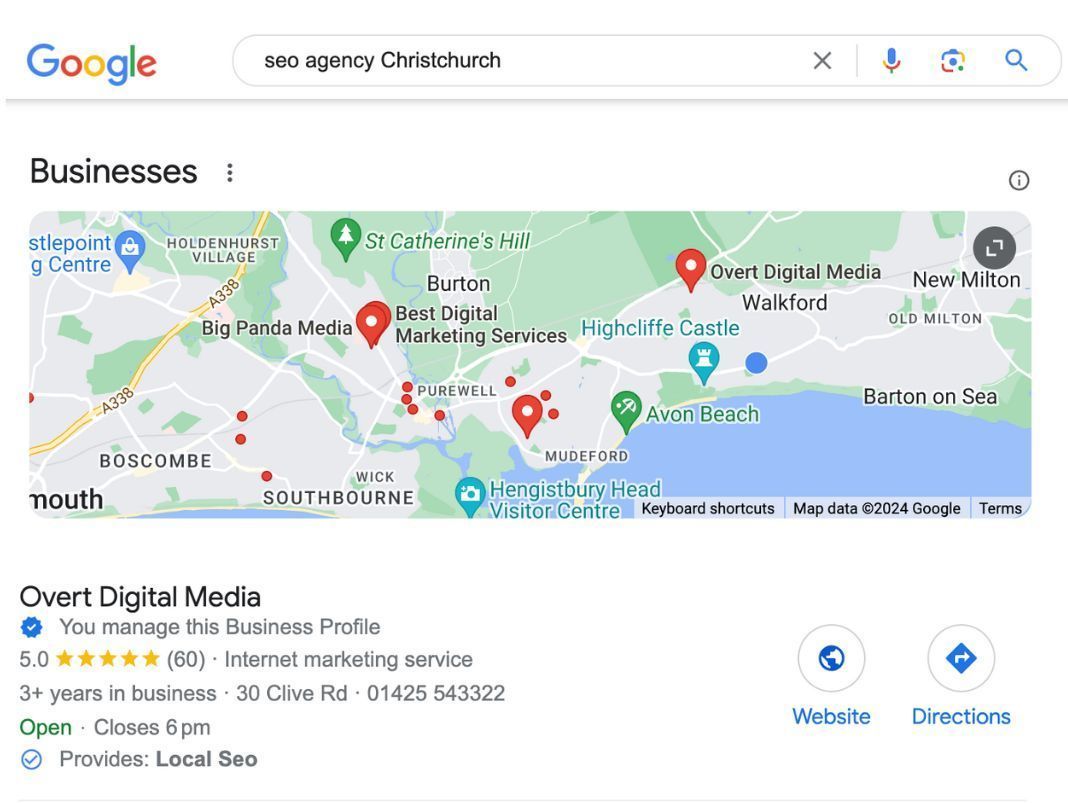
The Map pack is the section of Google Maps that appears towards the top of the search engine results page (SERP) just under the Sponsored (paid) listings.
Why is the MapPack important
Besides its proximity to the top of the search results for any given search, Maps Pack results are prioritised for localised searches such as 'SEO Agency Near Me' or 'Web Designer in Christchurch'. Additionally, many potential customers will choose a provider based on a combination of proximity and the number of good reviews, often without even visiting your website.
There is an overlap with Local SEO, but there are significant differences as well. Think of it as the bright, eye-catching signage on your well-maintained building. While local SEO is the foundation, Google Maps SEO puts your business on the map (literally!).
Here's what Google Maps SEO involves:
- Optimising GMB Profile: This includes keeping your profile information accurate and consistent, utilising high-quality content such as photos, videos, and curated posts, responding to reviews promptly, and leveraging features like Google Posts to keep your audience engaged.
- Category Selection: Choosing the most relevant categories to represent your business on Google Maps accurately.
- Encouraging Customer Reviews: Positive reviews are a significant ranking factor in Google Maps.
- Location Signals: Ensuring your business address is accurate across all online platforms and citations.
- Proximity to Searches: Businesses closer to a searcher's location tend to rank higher in map results.
By optimising your Google Maps presence, you increase the chances of your business appearing prominently in the map pack. This section displays three local businesses for a particular search. This prime location can significantly boost your visibility to potential customers searching for businesses in your area.
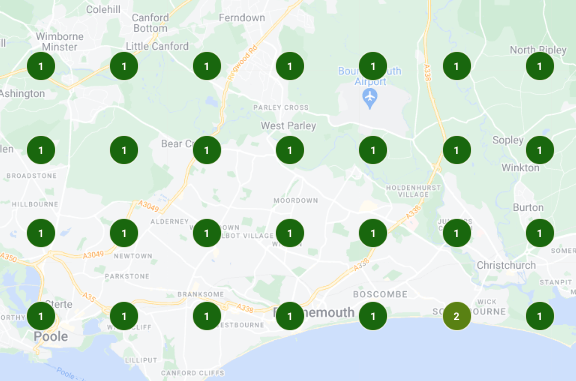
The Power of Google Maps SEO
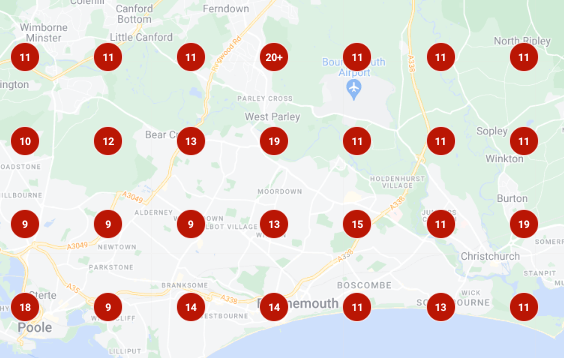
Below you can see the results of a successful Google Maps SEO campaign we conducted recently.
Local SEO and Google Maps SEO Working Together
While local SEO and Google Maps SEO have distinct areas of focus, they should be regarded as complementary strategies. Here's how they work together:
- Local SEO strengthens Google Maps SEO: A well-optimised website with strong local SEO signals sends positive messages to Google about your business's legitimacy and local relevance. Both Local SEO and Google Maps SEO improve your ranking across Google.
- Google Maps SEO enhances local SEO: A well-optimised GMB profile with positive reviews and frequent engagement tells Google that your business is active and trusted by local customers.
- Google always wants to return 'good' results on any search engine results page (SERPs), and reviews are one key way that Google can ascertain whether your business is a good result for any specific search.
- Combined Impact: When local SEO and Google Maps SEO work together, they deliver much better results than either one will on its own. A strong online presence and a prominent map listing significantly increase your chances of attracting local customers.
Your Local SEO and Google Maps SEO Checklist
Here are some practical steps you can take to leverage the combined power of local SEO and Google Maps SEO:
- Claim and Optimise your GMB Profile: This is the first and most crucial step. It puts you on Google Maps and local search results, ensures accurate business info, helps you rank higher, and lets you connect with customers through reviews, posts, and photos. It's the foundation for local SEO and a must-have for attracting more customers.
- Conduct Keyword Research: Keyword research is essential for local SEO because it helps you target the specific phrases people in your area are searching for. Including these keywords in your website content and GMB profile description makes your business more likely to appear in relevant local search results. This can significantly increase your visibility and attract more potential customers.
There are many tools available, including free tools such as Google Keyword Planner and Google Trends or paid options like SE Ranking, Ahrefs, or SEMrush. You can identify the specific search terms people in your area use to find businesses like yours. Integrating these keywords into your website content and GMB profile descriptions increases your business's ranking in relevant local searches, boosting visibility and attracting more customers.
- Build Local Citations: Use online directories and relevant websites in your area to build citations with accurate NAP information.
- Encourage Positive Online Reviews: Respond promptly and professionally to all positive and negative reviews. Positive reviews are a ranking factor while addressing negative reviews demonstrates customer care.
Encouraging and responding to reviews is one of the most powerful ways of attracting new customers. The social proof provided by other people explaining how good your products or services are is not to be underestimated. It should be a core area of focus in your marketing strategy.
Your Google Business Profile makes it easy to request reviews, allowing you to send a link via email, text, WhatsApp, etc. Not only are Reviews easy to request, but they also cost nothing other than a little time.
- Maintain Website Freshness: Regularly update your website content with fresh, local information. This could include blog posts about local events, industry updates relevant to your location, or new products or services offered specifically to your local clientele.
- Utilise GMB Posts: Regularly share updates, promotions, and events on your GMB profile through Google Posts. Engaging content keeps your business relevant and drives user interaction.
Keeping your Google My Business (GMB) profile fresh with regular updates is essential for local SEO success. These updates could include updates on promotions, events, and business information. Search engines favour active profiles, so consistent updates signal that your business is relevant and trustworthy. This can improve your ranking in local search results and attract more potential customers actively searching for your offer.
- Track Your Results: Monitor your website traffic, track your ranking in local search results and Google Maps, and analyse customer reviews. This data will help you refine your strategies and identify areas for improvement.
By consistently implementing these strategies, you can establish a dominant online presence and leverage the combined power of local SEO and Google Maps SEO. Remember, SEO is an ongoing process. Stay informed about the latest trends and best practices to optimise your online presence and attract more local customers.
SEO can feel overwhelming, especially when deciding which approach best suits your business. Both Google Maps SEO and Local SEO offer powerful tools but cater to slightly different needs. Here's a breakdown to help you determine the champion for your local business:
Focus on Google Maps SEO if:
- Walk-in traffic and calls are your lifeblood: Brick-and-mortar businesses like restaurants, cafes, or retail stores heavily rely on attracting customers who are physically nearby. Google Maps SEO ensures prominent placement within the coveted Google Maps 3-pack, putting your business name and location directly in front of potential customers searching for what you offer.
- Visual appeal is key: Google Maps listings allow you to showcase high-quality photos and videos of your business. This is a powerful tool for restaurants to entice customers with mouthwatering food pictures or for retail stores to highlight their inviting atmosphere.
- You are in a town with a high population: If there is more than enough work for your business in a 10- —or 20-mile radius, Google Maps SEO will help you attract more customers from that area.
Focus on Local SEO if:
- Your service area extends beyond immediate surroundings: Service-based businesses like surveyors or financial advisors often target a wider geographic area. Local SEO helps you rank higher in local search results across Google, not just maps, ensuring your business shows up for searches within your designated service area.
- Your target audience searches for your services online: Many businesses, like accountants, lawyers, or personal trainers, attract customers who initiate their search online. Local SEO helps you climb the ranks in organic search results, making you more discoverable for people actively searching for your services.
For the best results: Embrace Both! Local SEO & Google Maps SEO
While the choice might seem like Google Maps SEO vs Local SEO, the best results often come from a combined effort. By implementing both strategies, you create a powerful synergy that:
- Maximises visibility: Capture attention across Google Maps and organic search results, ensuring your business is seen by potential customers searching for you in various ways.
- Builds trust and authority: Consistent optimisation across platforms signals to search engines that you're a relevant and active business in your local area.
- Attracts a broader audience: Reach both those searching specifically on Google Maps and those browsing organic search results for your services.
Remember, regardless of your chosen approach, claiming and optimising your Google My Business profile remains crucial. It's the foundation for both Google Maps SEO and Local SEO, and you need to pay attention to it to limit your online potential.
Ultimately, the best approach depends on your unique business goals and target audience. By understanding the strengths of Google Maps SEO and Local SEO, you can make an informed decision and leverage the power of both to achieve local SEO dominance and attract more customers through your doors.
Conclusion
In conclusion, Google Maps SEO and Local SEO are intertwined strategies to supercharge your local online presence. However, they have distinct strengths that cater to different business needs.
- Google Maps SEO: Focuses on optimising your Google My Business (GMB) profile for prime placement within the Google Maps platform, specifically the coveted 3-pack of businesses displayed for local searches. This is ideal for companies with a strong physical presence and focusing on attracting walk-in traffic or calls. Benefits include increased visibility within Google Maps, improved click-through rates due to prominent placement, and the ability to showcase customer reviews and business information directly.
- Local SEO: This broader strategy encompasses optimising your website and online presence for local search results across Google, not just maps. It involves tactics like keyword research, building local citations (NAP consistency across directories), and local content creation. Local SEO is well-suited for businesses with a service area or targeting a wider local audience beyond immediate foot traffic. Benefits include improved ranking in local search results (both maps and organic listings), attracting customers searching for your services online, and establishing your business as a local authority.
Choosing the right approach depends on your business goals. If attracting local customers is your priority, focus on Google Maps SEO to secure that coveted 3-pack spot. If your target audience searches for your services online or has a broader geographic reach, focus on Local SEO strategies. The best scenario? Implement both! Combining Google Maps SEO and Local SEO creates a powerful synergy that significantly increases your online visibility, builds trust with local customers, and ultimately drives more business.
Remember, a strong online presence is key to local success. Regardless of your chosen approach, prioritise claiming and optimising your GMB profile, respond to reviews, and engage with your local audience online.
Request your free SEO & Website audit