How is Local SEO different from normal SEO
Local SEO & Organic SEO - What's best for your business?
What Is the Difference Between Local and Organic SEO?
If you’re like most small business owners, you’ve probably been bombarded with SEO promises before, only to end up wondering if it was all a waste of money. As an SEO agency focused on what actually works, I believe that not all SEO is created equal, especially for local businesses. Here, we’ll explore why Local SEO might be the practical choice if you’re looking for timely, measurable results.
Local SEO vs. Organic SEO: The Basics
- Local SEO: This strategy helps your business show up in geographically specific searches, like “best plumbers in Christchurch” or “hair salon near me.” If most of your customers are local, Local SEO is designed to target the people around you who are ready to buy or book services.
- Organic SEO: Organic SEO, on the other hand, aims for broader keywords that don’t depend on location. These are more “big-picture” keywords like “how to fix a leaky faucet.” Organic SEO is generally more useful for online-only businesses or those reaching a national audience. For a local business, Organic SEO is typically slower and less direct when it comes to getting new leads.
For a small business wanting to keep things local, Local SEO often brings more bang for your buck, giving you the visibility you need without spreading yourself thin trying to reach people far outside your area.
Key Differences: Target Audience, SERPs, and Ranking Factors
- Target Audience
- Local SEO: Reaches people nearby who are often ready to buy. Think of your Local SEO audience as people who just decided they need your product or service and are ready to take action.
- Organic SEO: Casts a wider net, bringing in people who may be just looking for information or browsing products. The focus is more on visibility than immediate conversions.
- Where You Show Up in Search Results
- Local SEO: With Local SEO, you’re aiming to appear in the “Local Pack”—those map-based listings near the top of Google with local business names, reviews, and a link to directions.
- Organic SEO: Organic SEO results appear below the Local Pack, often including blog posts, informational pages, and product listings that aren’t location-specific.
- Ranking Factors and What Matters Most
- Local SEO: This strategy puts a lot of weight on things like your Google Business profile, online reviews, and consistent information (Name, Address, Phone) across different websites.
- Organic SEO: Here, it’s more about the quality of your website content, technical factors (like how fast your site loads), and building links back to your site from reputable websites.
Why Local SEO Is a Better Fit for Small Businesses
If you’re running a local business, Local SEO can make a faster, more visible impact on your bottom line. Here’s why:
- Faster Results: Local SEO targets people who are ready to make a decision, so you’re more likely to see results quickly. Your website, reviews, and local listings work together to make sure nearby customers can find you easily.
- Higher Quality Leads: Local SEO reaches people who have already decided that they need your service or product and are now looking for a supplier.
For most small businesses, focusing on Local SEO will give you the kind of practical, lead-generating visibility that general SEO just doesn’t deliver.
Find out more about Local SEO
Getting Clear, Concise SEO Results
One of the biggest frustrations with SEO for small businesses is that it’s hard to understand what you’re paying for. We believe that clear, straightforward reports are critical so you can see exactly how Local SEO is helping your business grow.
Our reports focus on the essentials:
- New Leads: You’ll see how many people are finding you online and reaching out directly because of Local SEO efforts.
- Google Business Metrics: See how often your business is appearing in local search results, how many calls you’re receiving, and how people are interacting with your Google profile.
- Keyword Tracking: Track the specific keywords that matter to your business, like “SEO agency in Christchurch,” so you can see exactly where you’re showing up for customers in your area.
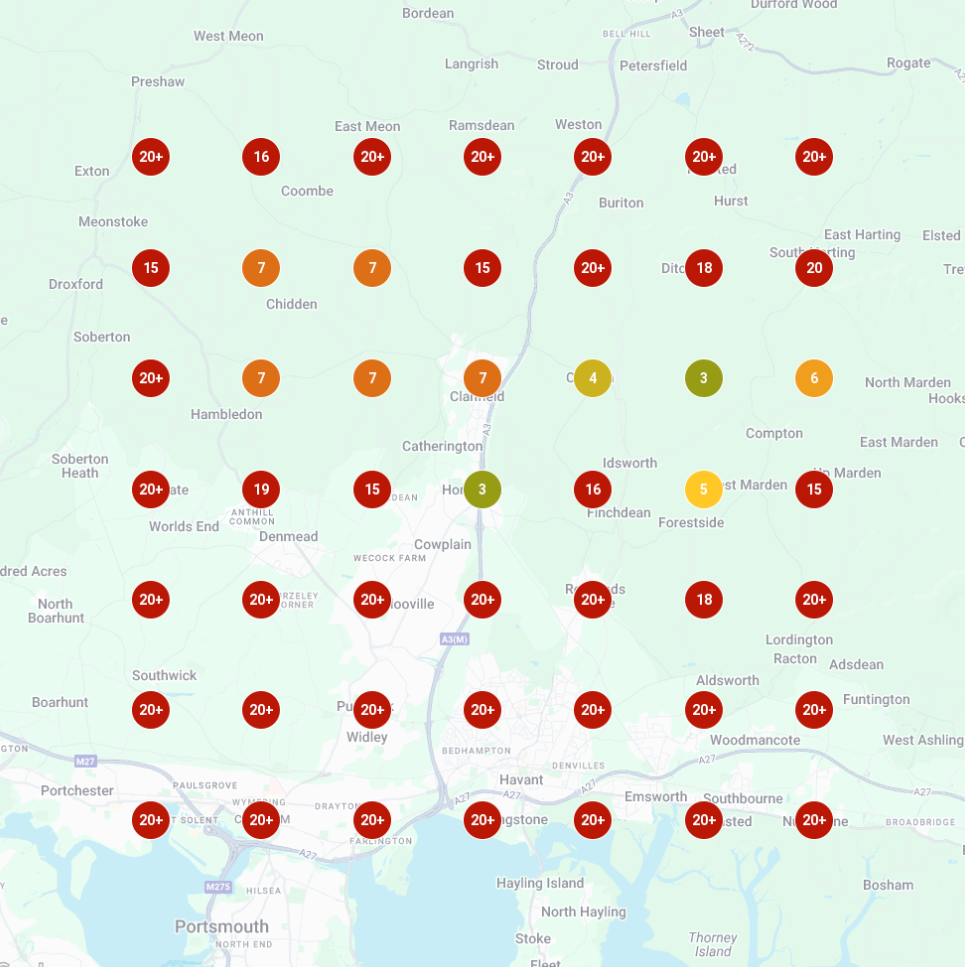
- Heat Map: A picture says a thousand words! Having a graphical representation of your where you are ranking for your chosen keywords makes it easy for small business owners to understand how their SEO campaign is performing and can highlight specific areas for the SEO agency to target.
With clear, easy-to-read reports, you’ll always know what’s working, what’s not, and where your investment is making an impact.
Request your Free SEO Audit
When Organic SEO Might Be Relevant
There are cases when Organic SEO can still be valuable for local businesses, such as building authority or driving traffic to blogs or resources on your website. For example, a local bakery might use Organic SEO to attract people looking for recipes or baking tips, which could bring more visibility to their site over time. But keep in mind, Organic SEO is a slower burn; it’s more of a long-term play and doesn’t always lead to immediate leads.
Generally speaking organic SEO is more appropriate when a company is focusing on informational type searches such as "how do I get to the top of Google" as opposed to more transactional searches with commercial intent such as "seo agency near me".
Find out more about Organic SEO
Combining Local and Organic SEO
While Local SEO is generally the go-to for small businesses, combining Local and Organic SEO can help build brand awareness and drive traffic over the long term. Just be cautious: Local SEO and Organic SEO require different techniques and skillsets so doubling up on these two services will increase costs. Focusing too heavily on Organic SEO can dilute your local reach and may not give you the immediate, practical results you need.
The Two Key Questions to Kickstart Your SEO Campaign:
- What Search Term Do I Want to Rank For?
- Where Do I Want to Appear?
Before diving into an SEO campaign, it’s essential to get clear on two foundational questions that will shape the direction and success of your strategy. Answering these will make sure you’re targeting the right audience and locations, maximizing the impact of your investment.
What Keyword Do I Want to Rank For?
This question is all about identifying the search terms (keywords) that potential customers use when looking for services like yours. For local businesses, these are often straightforward but targeted keywords that reflect what you offer, your industry, and how customers talk about your services.
For example:
- If you’re a plumber, you may want to rank for terms like “emergency plumber” or “plumbing repair.”
- A law firm might want to target “family lawyer” or “divorce attorney.”
But here’s the kicker: for local businesses, you’ll often benefit from adding location-specific keywords. This makes your business more relevant to people nearby, so instead of just “plumber,” you’d target “plumber in Christchurch” or “best plumber near me.” It’s about making sure your keywords connect to how people in your area actually search for services like yours.
Tip: Think about the questions or issues customers typically have when they need your service and use those as inspiration for your keywords. Targeting specific, relevant terms can mean the difference between attracting curious browsers and ready-to-buy customers.
Where Do I Want to Appear?
Once you know what keywords you want to rank for, the next question is: where do you want those search results to show up? For small, local businesses, the answer is usually within your immediate area or a specific radius around your location.
Local SEO aims to make sure your business appears in search results for people close to you, like in Google’s Local Pack (those map-based results at the top) and on location-based search platforms like Google Maps. If you’re a brick-and-mortar store, service provider, or any business relying on local customers, you’ll want to focus on ranking in your town, city, or neighbourhood—wherever your customers are actually located.
If you’re looking to bring in a regional audience (e.g., the whole Dorset area), then it’s about expanding that radius but still keeping your focus local. Conversely, if you’re a business that sells products nationally, then you’ll look more broadly at Organic SEO for national ranking, though that generally requires more resources and patience.
Tip: Consider where most of your business comes from or where you’d like to expand within your region. This will guide your strategy for Local SEO and help you avoid spreading your efforts too thin over areas that may not yield many leads.
By answering these two questions—what you want to rank for and where you want to appear—you’ll have a clear roadmap for building an SEO strategy that truly aligns with your business goals. It keeps your efforts focused, your audience targeted, and your investment working where it matters most.
Final Takeaway: Local SEO for Practical, Tangible Results
From my experience as an SEO agency, Local SEO is the better fit for small businesses that need leads from nearby customers and don’t want to get lost in a national SEO strategy. It brings more relevance and quicker results and makes it easy to see where your investment is paying off. So if you’re done with confusing, high-cost SEO that doesn’t seem to move the needle, it’s time to focus on an approach that actually delivers on what matters—bringing customers to your door.
Local SEO helps you get the visibility you need, in the places where it counts most. And with clear, concise reporting, you’ll always know what you’re getting out of it.
If you would like to know more or would like additional information please complete the form below and one of our SEO consultants will be in touch shortly.
Contact an SEO Consultant