Integrating CRM with Digital Marketing: How to Create a Seamless Customer Experience

October 31, 2024

How linking CRM with digital marketing can improve your customer interactions.

For businesses today, making sure that customers have a smooth and consistent experience is key. One way to achieve this is by connecting your Customer Relationship Management (CRM) system with your digital marketing efforts. By doing this, you can improve how you interact with your audience and ensure that your messaging is relevant, timely, and helpful. In this blog, we explore how integrating your CRM with digital marketing can enhance your customer’s experience and help you increase conversions.

What is CRM and Digital Marketing Integration?

CRM systems are tools that help businesses manage relationships with their customers. They store information like customer contact details, purchase history, and any interactions with your business, making it easier to track and organise everything in one place.


Digital marketing, on the other hand, is the collection of online strategies you use to promote your business—through emails, social media, search engines, and more. When you bring these two things together, it allows your marketing to be more informed by the real-time data you have on your customers.

Why Integrating CRM with Digital Marketing Makes Sense

1. More Personalised Interactions


When you integrate your CRM with digital marketing, it becomes much easier to tailor your communications to individual customers. Instead of sending generic messages, you can craft more relevant and personal interactions based on what you know about each customer.


For example, if someone has previously bought from a particular product category, you can send them updates about similar products or let them know when there is a sale in that category. This personal touch makes customers feel recognised, which can strengthen their connection with your business.


2. Better Targeting


A CRM system gives you valuable insights into your customers’ preferences and behaviours. By segmenting your audience into different groups—based on their interests, buying patterns, or even their stage in the sales process—you can create marketing campaigns that are more targeted and relevant to each group.


For instance, you might want to send a different message to customers who are browsing but haven’t made a purchase compared to those who are frequent buyers. This ensures that each group gets the right information, rather than a one-size-fits-all approach that may not resonate.


3. Automating Routine Tasks


When you combine CRM with your digital marketing tools, many routine tasks can be automated. This means less time spent on repetitive actions like sending follow-up emails or scheduling reminders. For example, you can set up automated emails that are triggered when someone interacts with your website or makes a purchase.


This automation helps ensure that you stay in touch with your customers without the need for constant manual intervention, keeping your brand top of mind.


4. Understanding the Customer Journey


Integrating CRM and digital marketing helps you get a clearer picture of the entire customer journey. From the first time someone visits your website to their final purchase, you can track every interaction they have with your brand. This visibility allows you to see what’s working well and where there might be friction points that need to be addressed.


By having a better understanding of your customer’s journey, you can refine your approach and make it easier for people to move from interest to purchase, improving their overall experience along the way.


5. Making Smarter Decisions with Data


A CRM system provides you with data that can guide your marketing decisions. By integrating it with your digital marketing efforts, you are able to analyse what is working and what isn’t in real time. This helps you make more informed decisions about where to focus your resources and how to adjust your strategies.


For example, you might find that certain types of emails lead to more sales, or that a particular customer segment is more likely to respond to a specific kind of offer. By using this data to fine-tune your marketing, you can avoid guesswork and improve your results over time.

How CRM Integration Can Improve Conversion Rates

One of the main goals of any marketing strategy is to convert leads into paying customers. CRM integration with digital marketing can improve conversion rates by:


1. Tailored Content for Leads


Not all leads are ready to make a purchase immediately. By using your CRM data, you can deliver content that’s suited to individual lead’s level of interest or needs. For example, if someone has been looking at a particular service on your website but hasn’t decided, you could send them additional information to help them decide, such as a case study or customer testimonial.


This keeps the conversation going without being overly pushy, allowing potential customers to engage with your brand on their own terms.


2. More Effective Retargeting


If someone shows interest in your business but hasn’t yet converted, retargeting can help bring them back. By integrating your CRM data with retargeting ads, you can make sure that these ads are highly relevant to what the customer has already shown interest in.


For example, if a customer browses a product but doesn’t complete the purchase, you can serve them an ad for that product, perhaps with a special offer or reminder. This gentle nudge can often be what’s needed to turn a potential customer into a paying one.


3. Opportunities for Upselling and Cross-Selling


CRM data can also reveal opportunities for upselling or cross-selling. If you know what a customer has already bought, you can suggest related items that they might find useful, or offer an upgrade to their purchase. For instance, if someone buys a basic version of a product, you can send them an offer for a premium version or complementary accessories.


This doesn’t just boost sales; it also adds value for your customers by providing them with recommendations that make sense based on their interests.


Creating a Consistent Experience for Customers


By integrating CRM with digital marketing, you can provide a more consistent experience for your customers across all touchpoints. Whether they are receiving an email, seeing an ad, or visiting your website, the messaging and offers they receive will be more aligned with their individual preferences.


This creates a smoother experience for the customer, which can help build trust and loyalty. Plus, by automating parts of the process, you ensure that communication happens when it’s needed, without overwhelming the customer.

Conclusion: Using CRM to Support Better Marketing

Bringing CRM and digital marketing together helps businesses interact with their customers in a way that feels more thoughtful and organised. By using the data you already have, you can make better decisions, improve customer relationships, and ultimately drive more conversions.


If you are looking to integrate your CRM with digital marketing and enhance the way you connect with customers, Overt Digital Media can help. Visit www.overtdigitalmedia.com to find out how we can support your business.

Book a Free Website SEO Audit

Challenges for Marketers and Businesses


While good SEO agencies are used to adapting to changes in the Google search algorithm, the introduction of A.I. summaries is an unprecedented challenge. There will inevitably be an SEO 'arms race' for creating content that gets referenced within these summaries. This race will inevitably be won by companies with big budgets that can afford the time and cost of producing huge amounts of detailed content.

 Introducing AI-generated content at the top of search results has made SEO more challenging. One of the most pressing concerns is the potential loss of organic traffic. As AI-generated summaries meet users' needs without needing to click further, websites may experience a decline in traffic, even if they continue to rank well on the results page.


This change demands a strategic pivot. Marketers need to consider how to make their content more engaging and essential, encouraging users to explore beyond the AI-generated answer. This might involve focusing on content that offers a deeper level of detail, personal insights, or unique perspectives that A.I. cannot easily replicate. Additionally, diversifying traffic sources by leveraging social media, email marketing, and other channels becomes more critical in a landscape where Google search might no longer be the primary driver of visits.


The Role of Paid Ads and the Strategic Implications


These AI-generated results are placed beneath paid ads on the search results page. This positioning increases the value of paid search advertisements. Since organic visibility is now more challenging, businesses might feel pressured to invest more in Google Ads to maintain their presence at the top of search results. Again, this will benefit larger companies that have bigger budgets at the expense of smaller businesses.


For many businesses, especially those with limited marketing budgets, this change could necessitate a re-evaluation of their marketing spend. Allocating more resources to paid search may become essential to compensate for the loss of organic traffic. However, this also means competing in a potentially more crowded and expensive ad marketplace.


However, relying solely on paid ads is not a sustainable solution for most businesses.  The key will be finding a balance between paid and organic strategies, ensuring that even if AI-generated content dominates informational searches, there are still ways to reach potential customers. 


Consider integrating paid ads with good content strategies focusing on authority, trustworthiness, and relevance to encourage users to click through to their sites.


Click here to learn more about Paid Ads and PPC

Optimising for the Future


Adapting to these changes requires a proactive approach.  Companies should start by auditing their existing content to identify areas where they can add value beyond what an A.I. summary can provide. This might involve updating their existing content to include more detail or analysis. Case studies, infographics, and videos can provide significant information for website visitors.


Additionally, businesses should build a strong brand presence across multiple platforms within their local area. While Google search remains a powerful tool, diversifying traffic sources and building direct relationships with customers through social media, newsletters, email marketing, and other channels such as local chambers of commerce and sponsoring events can raise your company's profile locally and further afield.

Book a Free SEO Audit

Google Business Profile - your new best friend


Optimising their Google Business Profile should be a top priority for service-based companies that want to attract companies in their local area. Your Google Business Profile dictates where your business ranks on Google Maps. Being in the top three ranked companies on Google Maps secures you a position in the Map Pack, which is positioned just under the paid ads in Google search results pages.


To learn more about optimising your Google business profile, visit our website's Google Maps SEO page or read one of our recent blogs about this subject.


Conclusion


Google's shift toward AI-generated content in search results marks a new era for SEO and digital marketing. While this change presents challenges for those relying on long-tail keywords and organic traffic, it also offers new opportunities to improve rankings in Google. Businesses can capitalise on these opportunities by creating content used by Google's A.I. summaries.


Staying ahead in this new search environment will require a significant and sustained effort, not to mention time and effort. Still, as with all SEO efforts, those who adapt quickly will thrive despite the challenges.


About Overt Digital Media


Overt Digital Media is a leading website design and SEO agency based in Christchurch on the edge of The New Forest. We serve customers throughout the Hampshire Dorset and Wiltshire regions. 


We specialise in website design and Local SEO, helping our clients attract more customers from their local area.  Should you need help getting your business noticed online or getting to the top of Google, please contact the team at Overt Digital Media and request your free SEO audit and website review.


Book a Free SEO Audit

By Jon Richardson December 7, 2025
Struggling for leads? 10 quick SEO secrets, UK agencies don't want you to know. Your competitors are getting all the leads while you're struggling to get noticed online. Sound familiar? Here's the truth most digital marketing agencies in Christchurch don't want you to discover: local SEO isn't rocket science, and you don't need a computer science degree to make it work. Most agencies overcomplicate things on purpose – it keeps you dependent on their services. But the reality is that small tweaks to how you present your business online can dramatically increase the number of local customers finding and choosing you over your competition. Let's break down the exact strategies that work, explained in plain English. Secret #1: Stop Fighting for "Plumber" – Win "Emergency Plumber Christchurch" Instead Forget trying to rank for broad terms like "plumber" or "electrician." You're competing against every business in the UK for those keywords. Instead, focus on what people actually type when they need your services urgently. Think like your customers. When someone's toilet is overflowing at 2am, they're not searching for "plumber." They're typing "emergency plumber near me" or "24 hour plumber in Christchurch, Dorset." What to do right now: Make a list of your services, then add your suburb or area to each one. Use these phrases naturally throughout your website content, especially on your main pages. Secret #2: Create Landing Pages for Each Area You Serve This is where most small businesses miss out on massive opportunities. Instead of one generic "Services" page, create separate pages for each suburb or area you work in. For example, if you're a carpet cleaner, don't just have one page about carpet cleaning. Create: "Carpet Cleaning in Highcliffe" "Carpet Cleaning in Christchurch" "Carpet Cleaning in Burton" What to do right now: Pick your top 3 service areas and create dedicated pages for each. Include local landmarks, mention the specific challenges customers in that area face, and use photos from actual jobs in those neighbourhoods. Secret #3: Your Google Business Profile is Your Secret Weapon Your Google Business Profile (formerly Google My Business) is often the first thing potential customers see. Yet most businesses treat it like an afterthought. Here's what separates the businesses getting calls from those being ignored: Post updates at least once a week Respond to every review within 24 hours Upload new photos monthly Keep your opening hours religiously up to date Use the "Products" section to showcase your key services What to do right now: Log into your Google Business Profile today. Check every detail is correct, upload 5 new photos, and write a post about a recent job or customer success story. 
By Jon Richardson November 22, 2025
Why Local Businesses Are Moving Away from Directories - And Finding Bigger Wins with Google Business Profile
By Jon Richardson November 17, 2025
Networking for Trades - Good & Bad
By Jon Richardson November 10, 2025
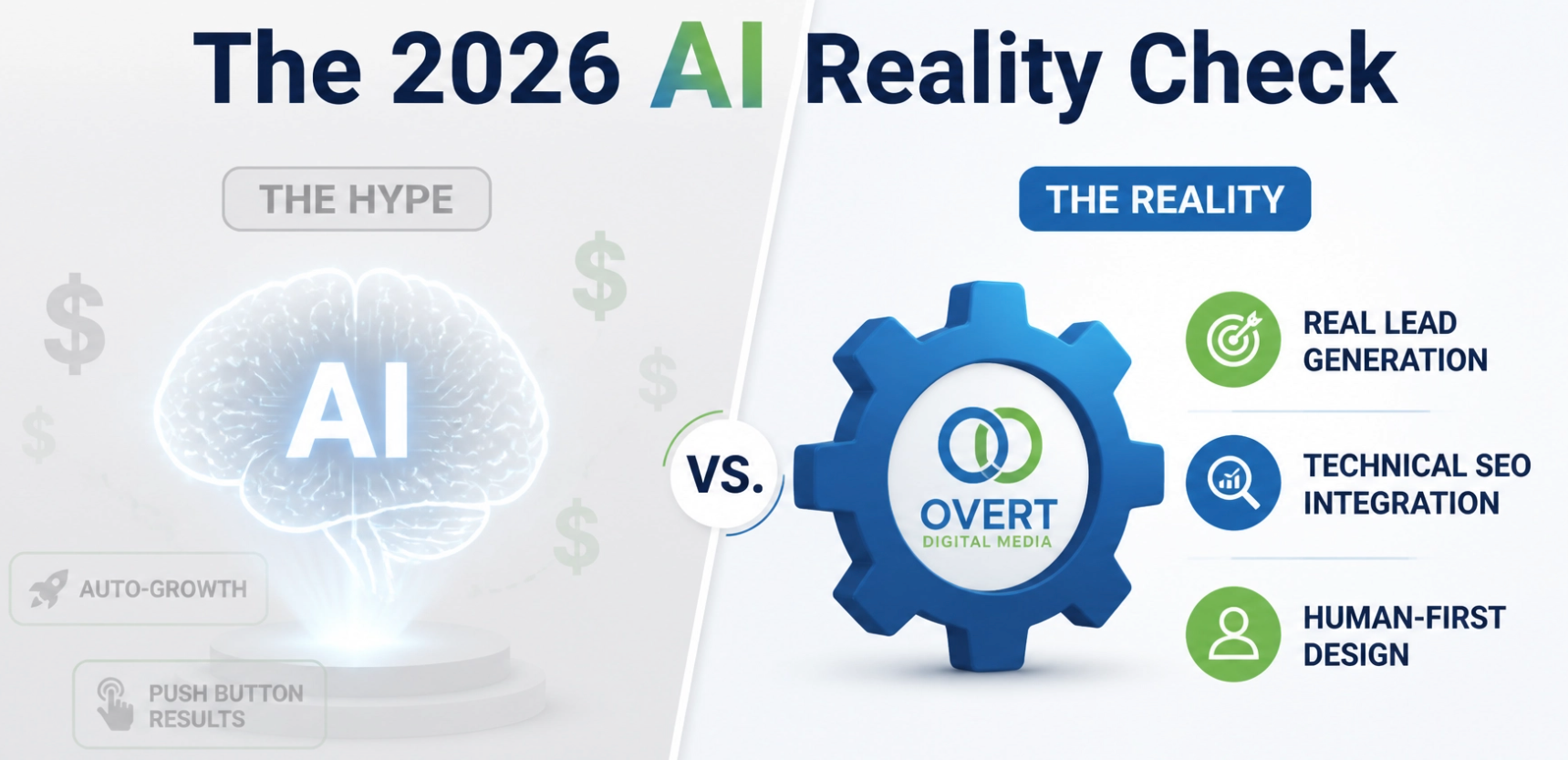
AI for the Local Business Owner: What’s Worth Using and What’s Just Hype!?! AI is everywhere right now. Every week, there’s a new tool, new feature or new “game-changer” that promises to transform your business overnight. For many local business owners, it feels like déjà vu — we’ve heard all this before. And yet… this time it’s different. AI isn’t just a buzzword for big tech firms anymore. It’s filtering down into everyday tools small businesses already use — your website builder, Google Business Profile, CRM, social media scheduler and even your email inbox. The challenge now isn’t whether to use AI, but which tools are actually worth your time — and which ones are just shiny distractions that slow you down. So, let’s cut through the noise and look at where AI really earns its keep for small, local businesses. The AI Tools That Actually Save You Time AI Email and Admin Assistants If you spend half your life replying to repetitive customer emails — booking confirmations, pricing queries, FAQs — AI can handle a lot of that grunt work for you. Tools like ChatGPT, Claude, or Microsoft Copilot can draft replies, check tone, or even integrate with Gmail or Outlook to automatically suggest responses. But the key is to train them with your own tone of voice . You don’t want robotic replies that sound like a call centre in space. Spend an hour teaching the system how you talk to customers, short, polite, straight to the point — and it’ll start saving you hours a week. If your inbox is a mess, Superhuman or Shortwave uses AI to summarise long threads and prioritise messages that actually need your attention. That’s a lifesaver when you’re on the go. AI Scheduling and Note-Taking If you use Zoom, Teams or Google Meet, you’ve probably noticed new “AI companion” features. They can record, summarise and create action lists from your meetings all automatically. Fireflies.ai and Fathom do this well and integrate with most platforms. Imagine finishing a customer call and having a neat summary of what was discussed, follow-ups and deadlines emailed to you within minutes. That’s practical AI. It doesn’t wow anyone on LinkedIn, but it gives you time back — and that’s what matters. AI Social Media Tools AI can now write your captions, crop your videos and even schedule posts at the times your audience is most active. Vista Social (which we use at OVERT DIGITAL MEDIA ) does a solid job of this, as does Later and Metricool. What’s worth using: AI tools that write drafts you can edit quickly not ones that try to take over the whole creative process. The point isn’t to hand everything over to the bot; it’s to speed up the parts you hate doing. The AI Tools That Actually Generate Leads AI isn’t just about saving time; it can actively help you win new business — if you use it the right way. Google Ads and Meta Ads Optimisation You’ve probably noticed that Google and Meta now talk about “Smart Campaigns” and “Advantage+” ads. That’s AI at work — algorithms that automatically test different ad headlines, images and targeting combinations to find what performs best. It’s far from perfect, but it’s powerful when used properly. The mistake small businesses make is letting the system run on autopilot without checking what it’s doing. AI works best when you feed it good data and clear goals. You still need to know what to target, where your audience lives, and what problem you’re solving. Let AI do the testing and optimisation — but don’t hand it the steering wheel. If you’re managing ads yourself, use AdCreative.ai to generate high-converting ad visuals and copy in minutes. It’s simple, quick and doesn’t look like it came from a robot. AI for Local SEO and Google Business Profile This is one area where AI genuinely gives small businesses a fighting chance against national brands. AI-powered tools like Local Falcon, BrightLocal and Surfer Local can scan your entire Google Maps ranking area and show exactly where you’re visible (and where you’re not). That’s data you could never get manually. You can then use AI to help write keyword-optimised posts, service descriptions, and responses to reviews. If you do it properly, you can dominate your local area because most of your competitors won’t even know these tools exist. We’ve tested this ourselves, and the difference can be night and day. Clients go from being invisible outside their postcode to ranking across an entire 10-mile radius in a matter of months. To learn more, check out our LOCAL SEO service page. AI Chat and Lead-Capture Agents Here’s a huge one. AI chat agents can now do far more than pop up on your site with “How can I help you today?”. They can qualify leads, answer FAQs, book appointments, and even follow up automatically. Tools like Tidio, Drift, or GoHighLevel AI Agents make it easy to build one that fits your tone and brand. Used properly, they can turn missed calls into booked jobs, especially for trades and service businesses where speed of response is everything. But be warned: this only works when your bot feels human. If it gives robotic, generic answers, it will kill trust instantly. Spend time training it with real questions and examples from your past conversations. You can see how we use automation like this on our AI Websites page. The Tools That Sound Exciting but Rarely Pay Off AI image generators, video avatars and content mills have their place, but most small businesses waste time chasing gimmicks that never generate a penny in return. AI Image Generators Everyone loves playing with Midjourney and DALL-E — but unless you’re in creative design or product marketing, it’s mostly just fun. They’re great for social graphics, concept visuals and mock-ups, but they take time to master. You’ll still need editing, branding and human judgment to make the results usable. Verdict: Nice to play with, not a daily essential. AI Blogging Tools You’ve probably seen the “write me 10 SEO-optimised blogs instantly” type tools. They can churn out text, sure, but it’s usually bland, repetitive and reads like it was written by a committee of robots. If your aim is to rank or build trust locally, that won’t cut it. AI is brilliant for drafting outlines and ideas (we use it for that all the time), but you still need a human to add expertise, local context and personality. Google’s algorithm is smart enough now to spot thin, generic AI content. You’ll do better with one well-written blog a month that genuinely helps people than with ten AI-generated ones that don’t say anything new. AI Video Avatars These have exploded in popularity, but most look awkward and fake when used for local service businesses. Unless you’re creating explainer videos or training content, it’s better to film yourself (or your team) for authenticity. AI avatars can’t replace genuine personality and personality is what sells local services. How to Tell if an AI Tool Is Worth It Before you sign up for yet another shiny new AI platform, ask three questions: Does it save me time every week? If it doesn’t make a recurring difference, it’s not worth keeping. Does it improve my marketing results? Does it generate more leads, improve conversions, or give insights I couldn’t get otherwise? Can I see myself actually using it? Most AI tools fail not because they’re bad, but because people forget they exist. Pick a few that fit neatly into your daily workflow. A good test is this: if you stop using it for a week and nothing gets harder, cancel it. The AI Tools We’d Recommend to a Local Business Right Now If you’re short on time and want a focused list, here’s what genuinely helps most small businesses: ChatGPT or Claude – for quick drafts, emails, ideas and posts. GoHighLevel AI Agent – for lead capture and automated follow-ups. Local Falcon – to track and improve your local visibility. Vista Social – to manage social posts and analyse engagement. Fireflies.ai – to summarise calls and meetings. AdCreative.ai – to create better-performing ad creatives quickly. Everything else? Nice to have, but not essential. The Future: AI as Your Silent Business Partner The smartest small businesses in 2025 won’t be the ones that chase every new trend. They’ll be the ones that quietly integrate AI into their day-to-day operations and never look back. AI won’t replace you (yet), but it will replace a lot of your admin, manual marketing, and repetitive customer interactions. That means you can spend more time doing what you actually enjoy, running your business, talking to customers, and delivering great work. Final Thoughts Most AI hype is built around things that look impressive. But the real gold is in the boring stuff — automation, data insights and everyday time-savers that keep your business moving faster than your competitors. Start small. Automate one thing. Measure the impact. Then add the next piece.vvWithin a few months, you’ll wonder how you ever managed without it. If you’d like help identifying the right AI tools for your business, or want us to integrate them into your marketing systems, BOOK A CHAT WITH THE TEAM AT OVERT DIGITAL MEDIA . We’ll show you what’s genuinely worth your investment… and what belongs firmly in the bin.
By Jon Richardson November 2, 2025
How AI Video Can Help You Win More Customers and Grow Your Business Faster
By Jon Richardson October 26, 2025
Forget doing everything, focus on marketing activities that actually drive leads and growth.
By Jon Richardson October 5, 2025
Take Control of Your Marketing with Our 73-Point Self-Service Audit.
By Jon Richardson September 28, 2025
Follow our 7-step process to get more Google Reviews for your business.
By Jon Richardson September 20, 2025
The 12-Point Checklist to See if Your Website is Up to Scratch
By Jon Richardson September 7, 2025
Why regular marketing is essential (and easy)!