4 Reasons Why Your Website isn't Converting Leads into Sales

Jon Richardson • July 11, 2021

Generate more leads from your website by increasing your conversion rate! 
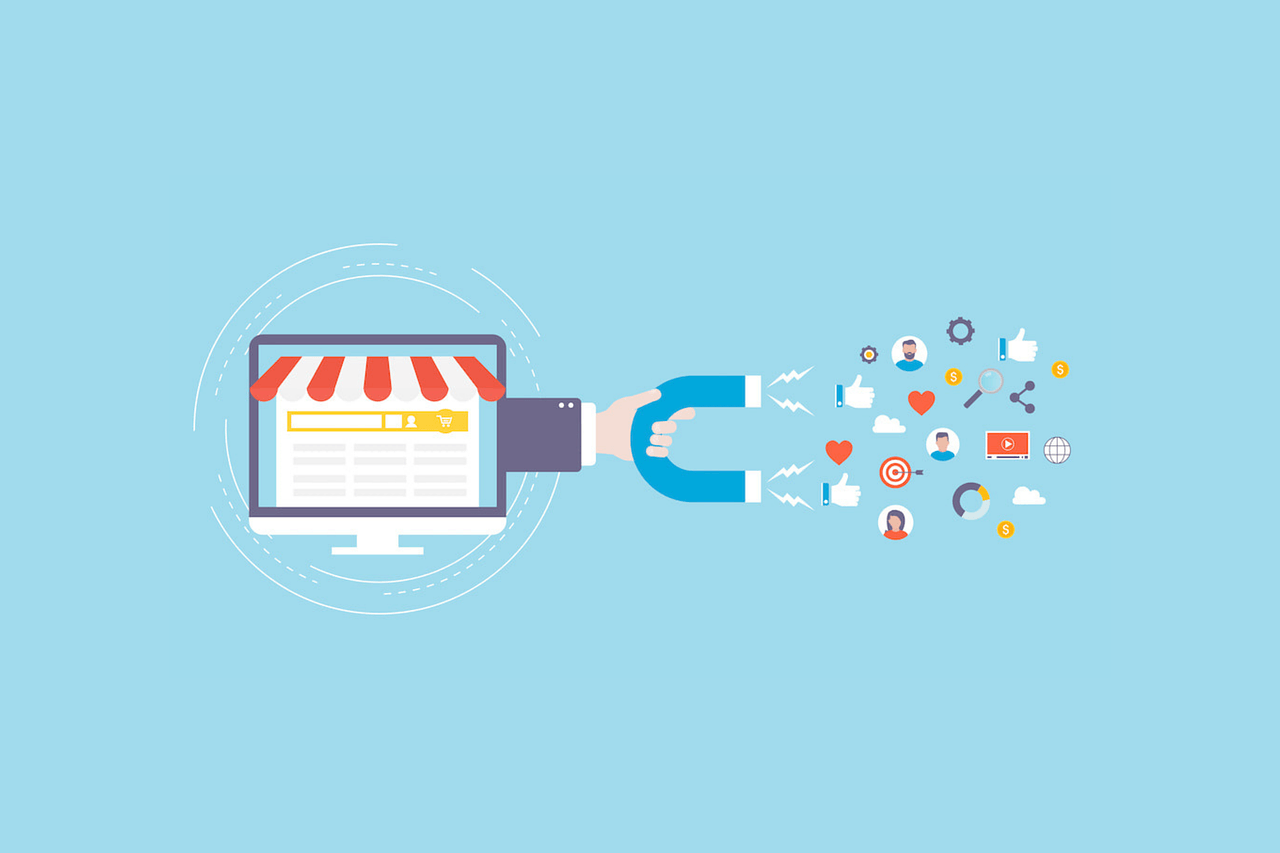
Get more leads from your website
So, you have spent lots of time and money on designing your new website and it looks great. You have optimised it for the keywords you want to rank for, and it is now ranking higher on Google and attracting many more visitors. So why are you still not getting any more leads?

The answer is that your website just isn’t converting those visitors into sales or leads. But why not? There are many possible answers to that question and this blog looks at a few of those.

The first question you must answer is ‘What actions do you want your customers to take on your website’? Do you want them to buy a product, book an appointment, contact you or download some information? If you do not know the answer to that question, your customers definitely wont and your website will appear confused.

There may be several answers to this question depending on where your customer is in the buying process. That is fine as long as your website is structured in a way that gives a clear path to visitors based upon what stage they are at.


Below are 4 reasons why your website may not be converting.

You don't have enough, or any, Calls to Action (CTAs)

Call to Action are the instructions on your website to your customers telling them what you want them to do next.  CTAs are important because they prompt your visitors to the next step in your sales and marketing process and will push those visitors along to the next stage. 


We consume information on a website differently than we do in a face to face setting. It is predominantly a one way process where we are passively consuming information. When we are talking to someone in person, particularly in a sales setting, we can ask, ‘do you want to buy this’ or ‘let’s book an appointment’.


These questions are called closing in a sales environment and CTAs are your websites’ way of closing the people they are engaging with.


Do not assume that your customers will know what action you will want them to take. Be clear and specific, i.e. ‘Buy Now’, ‘Email us Today’, ‘Call Now’. If your client has to think about what to do next, they probably won’t and will migrate away from your website. Not only does the Call to action on your website need to be clear on what it is you want them to do but it also has to be easy to do it. So make sure your ‘call now’ is linked with a ‘click to call’ function or the ‘buy now’ CTA is linked to that product in your online shop.


Make sure you have many different CTAs on your website strategically placed throughout your website. However, don’t put too many on there as it will be confusing, or worse seen as spamming.

There are too many choices

We all know how overwhelming it can be if we have too many choices. Imagine walking into an artisan coffee shop for the first time and getting asked you whether you wanted a cappuccino, latte, flat white, mocha, then asked you whether you wanted the Colombian, Moroccan, Italian or French blend, then asked whether you wanted full fat, semi skinned, skinny, oat, soya or almond milk! 


When we are presented with too many options it all becomes too much and we all find it difficult to make a decision, even though you may always have a skinny latte. Too many choices results in paralysis and inertia!


It may seem like a great idea to give your website visitors lots of options but all you end up doing is confusing them and making the choice on whether to engage with your website much more dificult.


The problem is exacerbated with websites where there is no one to identify whether your customer is getting overwhelmed, explain or simplify the choices.


Make sure for each call to action on your website there is just have a single clear choice that your customers can take. 

You're not selling on value

Let’s be clear, it doesn't matter how great your website is or what a great job your website designer did building your new website.  Your prospective customers will only proceed or purchase from you it they are getting value. It is your website's job to tell them what value they will be getting, ‘what’s in it for them’! 


That may not always be some financial value such as a discount it could be free advice or tips on how to improve their website traffic or conversion!


Regardless of whether you are trying to sell a chair or convince someone to book a free marketing audit you must sell the value.  Selling value has been the subject of many books and training courses so it is obviously too big a subject to cover in detail in this blog. But at a basic level you need to avoid what are known as ‘so what statements'.


Let’s take the free marketing audit example above. I could tell you that “Overt Digital Media provide a free 50 point marketing audit” to which you could say “so what”. I could then say “it looks at 50 ways you can promote your company or service”. Again “so what” but if I told you that “our free marketing audit will identify 50 ways you can engage with your customers more effectively, win new customers more easily and grow your business quicker and easier”. All of a sudden you can see the value in spending 30 minutes out of your day to take the audit.  By the way if that's something you'd like to do, please contact me to arrange your free marketing audit.


Similarly, if we take the chair example above. I could say “it’s a chair” but you could say “so what” to which I would say “you can sit on it, it is really comfortable” again, “so what” but if I say “I have this chair, it is really comfortable and allows you to rest and recover so that you feel relaxed and will have more energy to do things you want to do for the rest of the day!” All of sudden you can see the value of buying that chair.

Your website isn't mobile friendly.

It is a fact that the majority of website searches are conducted on mobile (54.8% in the first quarter of 2021). If your website isn’t mobile friendly you will find that visitors to your website will move on very quickly and your bounce rate will be high.


Simply put if your website isn’t mobile friendly you need to speak to a web designer and get a new website on a modern platform that is easy to navigate on mobile devices.


The latest generation of websites incorporate Artificial Intelligence that can adapt the design of your website for each user based on their device, the time, number of visits and location. This improves the experience of users making your website much more engaging.


For example if someone was visiting your website on their mobile during your opening hours you could change a Call to Action from ‘Email Us’ to ‘Call Now’. Or if they were near your location rather than ‘Call Us’ it could be ‘Visit Us’ and a map could appear with your location!


Artificial Intelligence has been shown to increase the conversion rate of websites by up to 19% and can become a game changer helping you to significantly grow your business. 


We have been incorporating A.I. into our customers websites for a long time now and we have see massive improvements in their conversion rates.  Often this has resulted in significant growth for our customers.   You can find out more about A.I. websites on our website.

Conclusion

There are many moving parts to a great website.  Not only does it have to have fantastic design and be pleasing to the eye it must also guide your prospective customers along a journey.  To do that you must incorporate several elements which can be summarised as, great design, compelling content, and a clear path to follow.  Fail on any of these and you will be losing business.


Building a website is cheap and easy, building a good website is hard and building a great website is a work of art and it is worth employing a professional web designer to ensure that your website works for you and not the other way round.

About Overt Digital Media

Overt Digital Media are a digital marketing agency based in Christchurch on the edge of The New Forest.  We specialise in website design, mobile Apps and affordable search engine optimisation.


Our websites, mobile apps and SEO services are designed to be affordable for small businesses and to deliver tangible results.  We use the latest technology and platforms and combine that with proactive advice and consultancy for our customers to help them acquire more customers and to grow their business.


By Jon Richardson April 11, 2026
Let’s be honest: you’re probably tough to contact That’s not a criticism. It just means you’re successful. Whether you’re a solicitor in Christchurch, a high-end salon owner in Bournemouth, or a trade specialist in the New Forest, you’re busy, in meetings, on-site, and focused on the work that keeps your business running. Here’s the issue: while you’re focused on your work, you’re missing new opportunities. When a contact form goes unread for hours, or a call goes to voicemail, you’ve effectively lost that lead you have worked so hard for. In today’s world, the fastest responder wins—not just the one who offers the best service. If you slow your sales process, you could lose leads before you even speak with them. The Brutal Reality of "Speed to Lead" People expect quick answers. If someone in Bournemouth needs a service at 7:35 PM on a Saturday, they want their problem solved right away or at least to know that someone will help as soon as possible. Your chances of converting a lead drop by 80% if you wait more than ten minutes to respond. By the time you finish a coffee or a client call, your lead may already have contacted someone else. If you’re not the first to answer or reply, you risk losing out. Today’s customers see slow responses as unreliable. If you take two days to respond to a quote request, they might think the whole job will take much longer. The Manual Bottleneck: Why You Are the Problem Most business owners we meet at Overt Digital Media value their personal touch. They like to answer emails themselves and to be the voice on the phone. But this approach may slow your growth. Think about your current process: A potential customer fills out a form on your website. An email notification lands in your inbox (among 50 other emails). You see it 45 minutes later while grabbing lunch. You tell yourself, "I'll reply when I get back to the office." You get back to the office, get distracted by an urgent issue, and finally reply at 6:00 PM. By 6:00 PM, that lead has already booked a consultation with another s eo agency in Christchurch or a different local provider who has a system in place to catch them instantly. Manually following up is tiring and inconsistent. It often makes you switch tasks, breaking your focus and lowering productivity. You end up doing admin work for free and missing out on income. Enter the 24/7 Gatekeeper: The AI Receptionist The most common problem is missing phone calls. You might be on another call, driving, or simply taking a break from work. Voicemail rarely works for leads. Fewer than one in ten people leave messages; most just hang up and call someone else. This is where an AI Receptionist comes in. Unlike a traditional answering service, which just takes a name and number. An AI receptionist can actually handle the inquiry. It can answer questions, qualify leads, and even book an appointment directly in your calendar. Picture a client calling your business at midnight. Instead of no going through to voicemail, they reach an intelligent assistant who answers their questions and books a meeting for Monday morning. You wake up to a full calendar, and your client feels confident. This is how you stay ahead without answering every call yourself. Book a demonstration of our AI Receptionist
By Jon Richardson March 23, 2026
Is your business closed after 5? - The cost of operating 9-5 in a 24/7 world
By Jon Richardson March 1, 2026
Beyond the Hype: Why Marblism and Relay.app are Redefining Productivity
By Jon Richardson February 15, 2026
Stop Paying for Marketing That Doesn't Work: A Simple Guide to Getting More Enquiries We have all been there, £2000 spent and no calls! You hand over thousands of pounds to someone who promises to "get your website to the top of Google." A few months pass. Maybe you get a fancy report every month. But when you check your phone? Silence. No calls. No enquiries. No new customers walking through the door. It's the single most frustrating problem facing small business owners. You're working flat out, doing a brilliant job for your customers, but the marketing side feels like throwing money into a black hole. The truth is, most marketing doesn't fail because it's poorly done. It fails because it's not focused on the right goal, i.e. making your phone ring. Why Your Marketing Budget Disappears Without Results Let's be honest about what usually happens when small businesses try to market themselves. Someone sells you on Facebook ads. You spend £50 a day for a month. You get hundreds of clicks, maybe thousands of "impressions" (whatever those are). The report looks impressive. But you can count the actual enquiries on one hand, and half of them are time-wasters. Or maybe you paid for a fancy website redesign. It looks gorgeous. Your mate said it's "really professional." But six months later, you're still getting the same trickle of enquiries you had before. The issue isn't that these things never work. The real problem is they're often sold as if they're the whole answer, when they're just part of the bigger picture. You don't just need more website visitors; you need more people calling you or filling out your contact form. ​ Most marketing agencies make their money from monthly retainers and big upfront fees. They're incentivised to keep you paying, not necessarily to get you results. That's not a conspiracy theory: it's just the way the industry works. What Actually Brings In Enquiries (Without Breaking the Bank) Now, let's look at what actually works for real businesses serving real customers. Make It Stupidly Easy to Find You When someone searches "plumber near me" or "accountant in Bournemouth," you want to show up. Not necessarily with a paid ad: with a proper listing that shows you're local, legitimate, and available. Your Google Business Profile is free. Completely free. Yet most small businesses either don't claim it or leave it half-finished. Make sure yours has: Your actual phone number (not just a contact form) Current opening hours Recent photos of your work or premises Responses to any reviews, good or bad This one step brings in more quality enquiries than most paid ads, because people searching are already interested in your services. You're not interrupting them; you're providing the answer they need.
By Jon Richardson February 1, 2026
Google Business Profile - Your Free & Secret SEO Tool
By Jon Richardson January 13, 2026
Why updating your Google Business Profile is a genuine no-brainer for local businesses.
By Jon Richardson January 3, 2026
The one question most small business owners are asking themselves: How can AI help my Business?
By Jon Richardson December 7, 2025
Struggling for leads? 10 quick SEO secrets, UK agencies don't want you to know. Your competitors are getting all the leads while you're struggling to get noticed online. Sound familiar? Here's the truth most digital marketing agencies in Christchurch don't want you to discover: local SEO isn't rocket science, and you don't need a computer science degree to make it work. Most agencies overcomplicate things on purpose – it keeps you dependent on their services. But the reality is that small tweaks to how you present your business online can dramatically increase the number of local customers finding and choosing you over your competition. Let's break down the exact strategies that work, explained in plain English. Secret #1: Stop Fighting for "Plumber" – Win "Emergency Plumber Christchurch" Instead Forget trying to rank for broad terms like "plumber" or "electrician." You're competing against every business in the UK for those keywords. Instead, focus on what people actually type when they need your services urgently. Think like your customers. When someone's toilet is overflowing at 2am, they're not searching for "plumber." They're typing "emergency plumber near me" or "24 hour plumber in Christchurch, Dorset." What to do right now: Make a list of your services, then add your suburb or area to each one. Use these phrases naturally throughout your website content, especially on your main pages. Secret #2: Create Landing Pages for Each Area You Serve This is where most small businesses miss out on massive opportunities. Instead of one generic "Services" page, create separate pages for each suburb or area you work in. For example, if you're a carpet cleaner, don't just have one page about carpet cleaning. Create: "Carpet Cleaning in Highcliffe" "Carpet Cleaning in Christchurch" "Carpet Cleaning in Burton" What to do right now: Pick your top 3 service areas and create dedicated pages for each. Include local landmarks, mention the specific challenges customers in that area face, and use photos from actual jobs in those neighbourhoods. Secret #3: Your Google Business Profile is Your Secret Weapon Your Google Business Profile (formerly Google My Business) is often the first thing potential customers see. Yet most businesses treat it like an afterthought. Here's what separates the businesses getting calls from those being ignored: Post updates at least once a week Respond to every review within 24 hours Upload new photos monthly Keep your opening hours religiously up to date Use the "Products" section to showcase your key services What to do right now: Log into your Google Business Profile today. Check every detail is correct, upload 5 new photos, and write a post about a recent job or customer success story. 
By Jon Richardson November 22, 2025
Why Local Businesses Are Moving Away from Directories - And Finding Bigger Wins with Google Business Profile
By Jon Richardson November 17, 2025
Networking for Trades - Good & Bad