5 Things that anyone can do to increase traffic to their website (and won't cost you a penny)

Jon Richardson • March 4, 2023

Increase the traffic to your website for free!

5 Things that anyone can do to get more leads from your website


For a long time just having a website has not been a nice-to-have, it has been a necessity. But with over 1.9 billion websites in existence, there is a lot of competition for new customers and attracting visitors to your website has never been harder or. more important


Additionally if you want to turn those website visitors into loyal customers, you need to put some thought into your website's design and content. In this blog post, we'll dive into some effective strategies for getting more leads from your website, and provide actionable tips to help you improve your website's lead generation capabilities.


Create quality content


One of the most important things you can do to increase traffic to your website is to create quality content. Content that is informative, engaging, and relevant to your potential customers. By creating quality content, you can attract new visitors to your website, keep them engaged, and encourage them to return time and again.


The benefits of creating good content are much more than just increasing traffic to your website. Content can also help establish your brand as an authority in your field, build trust with your audience, and even improve your rankings in search engines like Google.


When creating content for your website, keep in mind the following points:


Understand your audience: Before you start creating content, you must understand your audience. What are your target audience's interests? What questions do they have? What problems are they trying to solve? Then, use this information to create relevant and or useful content for your target audience.


Choose the best format for your content: There are many different types of content you can create, including blog posts, articles, videos, infographics, and more. Choose the format that best fits your content and will be most engaging for your customer.


Focus on quality, not quantity: It's better to create a few pieces of high-quality content than to create lots of poor-quality content that won't interest your customers. Focus on creating content that provides value to your audience and is well-written, well-researched, and well-designed.


Use visuals: Visuals like images, videos, and infographics can make your content more engaging and shareable. Use visuals to break up text and help illustrate your points.


Optimise your content for search engines: Use relevant keywords in your content to help your content rank higher in search engine results pages (SERPs). But be careful not to overuse keywords, which can hurt your rankings.


Use your customer's language:  Make your content more engaging by using the terms and phrases your customers will use. Generally, this will be jargon free. 


By creating quality content that is relevant and useful to your target audience, you can increase traffic to your website and establish your brand as an authority in your industry or niche. So, take the time to create high-quality content that will engage and delight your audience. You'll see the benefits in increased traffic and engagement on your website.


Read our blog to learn more about creating quality content for your website:


6 Tips for creating quality content

Use Social Media to Increase Traffic to Your Website


Social media platforms like Facebook, LinkedIn, Twitter, and Instagram can be powerful tools for driving traffic to your website. By sharing links to your content on social media, engaging with your followers, and using relevant hashtags, you can help your content reach a wider audience and drive more traffic to your website.


Here are some tips to ensure that your efforts on social media are effective


Choose the right platforms: Not all social media platforms are suitable for every business. Instead, choose the platforms your target audience uses most often and focus your efforts on those.


Share your content: Share links to your content on social media, along with a brief description. Use eye-catching images or videos to help your posts stand out.


Engage with your followers: Social media is a two-way conversation. Respond to comments, answer questions, and engage with your followers to build relationships and encourage them to visit your website. We'll expand upon this section later.


Use hashtags: Hashtags or #'s can help your content reach a wider audience. Use relevant hashtags your target audience will likely be searching for, and include them in your posts.


Post regularly: Posting regularly on social media can help keep your followers engaged and increase their likelihood of visiting your website. Create a social media calendar and schedule posts in advance to make sure you're posting consistently.


Monitor your results: Use social media analytics tools to track the performance of your posts and see which types of content and hashtags drive the most traffic to your website. Use this information to adjust your social media strategy and optimise your results.


By leveraging social media to promote your content and engage with your audience, you can drive more traffic to your website and build your brand's online presence. So, take the time to create a social media strategy that's right for your business, and start seeing the benefits of increased traffic and engagement on your website.


Find out more about how Social Media can help generate more leads for your buisness


Engage with your customers online


Related to Social Media participating in Online Communities will improve your social media reach and increase the number of visitors to your website


Joining online forums, groups, and communities can be a great way to connect with like-minded individuals and build relationships with potential customers. In addition, participating in these communities and sharing your expertise can increase your brand's visibility and drive traffic to your website.


Here are some tips for participating in online communities to increase traffic to your website:


Find relevant communities: Look for online forums, groups, and communities relevant to your business and your target audience. For example, these communities could be a community-focused group on Facebook or an industry-specific group on LinkedIn.


Introduce yourself: Once you've found a community to join, introduce yourself and let other members know who you are and what you do. Make sure to follow any community guidelines or rules when introducing yourself.


Share your expertise: Share your knowledge and expertise by answering questions and providing helpful advice to other community members. This will help establish you as an authority in your field and encourage others to visit your website to learn more.


Share your content: When appropriate, share links to your blog posts or other content relevant to the discussion. Make sure to follow any community guidelines or rules around self-promotion.


Be respectful and helpful: Always respect other community members and avoid engaging in negative or confrontational discussions. Instead, focus on being helpful and providing value to the community.


Participating in online communities and sharing your expertise can increase your brand's visibility and drive traffic to your website. So, take the time to find relevant communities and engage with their members. 


Use Email Marketing to Increase Traffic to Your Website


Email marketing is a powerful tool for building relationships with your audience and driving traffic to your website. By compiling an email list, creating engaging email content, and including links to your website in your emails, you can encourage your subscribers to visit your website and engage with your brand.


Here are some tips for using email marketing to increase traffic to your website:


Write an engaging subject line: The email subject line is the most critical component of an email marketing campaign. It's the first thing your audience will see, and it can determine whether the recipients open or delete your email. A good email subject line should be attention-grabbing, clear, and concise. It should give your audience a reason to open your email and engage with your content. By taking the time to craft compelling subject lines, you can increase the likelihood that your emails will be opened, read, and acted upon, ultimately leading to more successful email campaigns.


Build an email list: There are many ways to build an email list, including offering a lead magnet (like a free guide or ebook) in exchange for email addresses, hosting a webinar or event, or adding a sign-up form to your website.


Create engaging email content: Your email content should be engaging, informative, and add value to your audience. Use a mix of content types, like blog posts, videos, and infographics, to keep your subscribers engaged.


Include links to your website: In every email you send, include links to your website. These can be links to your latest blog post, product or service pages, or any other relevant pages on your website. Make sure your links are prominently displayed and easy to click.


Personalise your emails: Use personalisation to make your emails more engaging and relevant to your subscribers. This can include using their name in the subject line or opening, segmenting your email list based on their interests or behaviour, and more.


Use a clear call-to-action: In every email, you send, include a clear call-to-action that encourages your subscribers to visit your website. This could be a button that says "Learn More," "Read More," or "Shop Now," depending on your goals.


Test and optimise your emails: Use email analytics tools to track the performance of your emails and see which types of content and calls-to-action drive the most traffic to your website. Use this information to adjust your email strategy and optimise your results.


Using email marketing to build relationships with your audience and drive traffic to your website, you can increase engagement with your brand and grow your online presence. So, take the time to create an email marketing strategy that's right for your business, and start seeing the benefits of increased traffic and engagement on your website.


Make it easy for customers to visit your website by including links to your website in your corporate literature.


Including links to your website in your company literature, email signatures, and invoices can be an effective way to increase traffic to your website. By providing easy access to your website, you can encourage users to visit and explore your site, leading to more website traffic.


When people click on your links and visit your website, it signals to search engines that it is relevant and valuable. This can help improve your search engine rankings, increasing website traffic. In addition, by including links to different pages on your website, such as blog posts or product pages, you can encourage users to explore more of your website. This can increase their engagement with your content and products, leading to more website traffic and sales.


Including links to your website in your company literature, email signatures, and invoices can also help build brand recognition and awareness. When people see your website link repeatedly, it can help reinforce your brand in their minds and make them more likely to visit your website. By consistently including links to your website in your communications, you can build a strong brand presence and increase your chances of driving more traffic to your website.


In summary, including links to your website in your company literature, email signatures, and invoices can be an effective way to increase traffic to your website. By providing easy access to your website, encouraging users to explore different pages on your site, and building brand recognition, you can increase engagement and drive more traffic to your website.


Conclusion


In conclusion, as a small business owner, you don't have to be a technical expert to improve your website's SEO performance and drive more traffic. Using simple strategies like optimising your website for search engines, using email marketing, participating in online communities, and including links to your website in your company literature, email signatures, and invoices, you can make a big impact on your website's success.


Even though some of these strategies may require a bit of time and effort, the benefits of increased website traffic and engagement can be significant for small businesses. By taking small steps and implementing these strategies over time, you can improve your website's visibility and attract more customers, ultimately leading to more business success. So, whether you're just starting your business or looking to enhance your online presence, these tips can help you get started and make a positive impact on your business.


About Overt Digital Media

digital marketing and seo consultant

Overt Digital Media are a digital marketing agency based in Christchurch, on the outskirts of Bournemouth.  We specialise in building modern websites and delivering affordable SEO services for small businesses throughout the South of England.


Our websites utilise Artificial Intelligence to increase their conversion rate.  This has been shown to increase the number of leads and sales generated by up to 19%.  


We have an enviable reputation of building high performing websites that rank highly in search engines. 


Contact an SEO Consultant Today

By Jon Richardson July 30, 2026
The difference between damaging your reputation and improving your service The main concern most business owners have about AI receptionists is not whether the technology works, but whether it will harm their reputation. You've put in years of effort to build up trust with your customers, since they know you. The idea of them hearing a mechanical voice, realising they're speaking to a machine, and then quietly wondering if you've cut your budget is a genuine worry—and it calls for a serious response, not just some marketing nonsense. The real fear If you picture an AI answering your phone, you'll most likely have an image something like this: it will be flat, show no emotions, and lack social awareness. Its voice will at once make the person who is calling think "I'm speaking to a machine". It's the sort that stumbles when someone has a rather unusual name or puts in a question that is only slightly unexpected. It's the kind that makes you seem as though you've cut corners in your customer service. It seems risky for someone who is a plumber, electrician, accountant, or consultant since your phone is usually the first point of contact and a poor experience at that stage can result in you losing the contract before you've even produced a quote. The second concern is more subtle. Even if the AI functions perfectly, certain customers could still be put off by the fact that it is automated. They may not call us again next time and might tell their friends, "Yes, they've gone fully automated now." This kind of reputational risk seems genuine since, to some extent, it is. What’s actually changed Actually, there has been a remarkable improvement in AI voice quality over the past 18 months; the best systems no longer come across as obviously robotic and instead sound as if they are being spoken by a real person—specifically, a professional receptionist having a normal conversation. However, there is an important exception: not all AI receptionists are the same. Some do sound natural. Others still sound as if they have been processed. And the difference is very significant. A good AI receptionist should: Sound conversational, not scripted. Handle common accents and speech patterns without stumbling. Pause and think (just like a human receptionist does) Ask sensible follow-up questions. Know when to hand over to a human without making it awkward. The higher-quality ones manage to do it well, while the cheaper ones don't, and your customers will be able to tell the difference. The customer experience question That's where things become interesting. You could think that customers dislike speaking to AI, but research and practical experience indicate a more complicated situation. Customers are usually not upset when an AI receptionist is used, provided it actually deals with their issue. They telephone to book an appointment, report a problem, or obtain basic information. They are often content with this arrangement if the AI can look after it within thirty seconds; and they are certainly satisfied with it if the other option is to wait on the phone for five minutes or having to call back during business hours. The issue isn't the AI itself, but rather with a poor-quality AI that causes it to repeat itself, fails to understand, or forces them into a frustrating conversation; it's that kind of experience which is negative. As for a good one, most customers never even notice it. Even so, the risk is there. Certain customers—especially older ones or those with more complicated requirements—may prefer to speak to a human. They may feel more at ease booking with a live person, and there is merit in that confidence, particularly in cases where trust is important. Where the real risk is (and where it isn’t) An AI receptionist works well when: Most of your calls follow a predictable pattern (booking appointments, taking messages, basic troubleshooting) Your customers are comfortable with technology. Your business model benefits from handling calls 24/7 You’re solving the “missed call” problem (calls coming in when you’re with other clients) An AI receptionist is risky when: Every call is complex and needs expert judgment. Your brand position depends on the personal touch. You’re using it as an excuse to avoid hiring. You’ve chosen a cheap system with mediocre voice quality. The honest trade-off As long as you select the right AI receptionist and use it correctly, it won't make you come across as cheap; on the contrary, it usually makes you sound professional and well organised. A response such as "Thanks for calling; I'll get someone to you shortly" given by a system that sounds natural seems competent. But it will make you sound cheap if you: Use a system with obviously robotic audio. Let it fumble through calls instead of handing to a human. Configure it to sound generic and corporate instead of like your business. Use it to avoid hiring when you actually need staff. The true skill lies in being able to tell the difference between using AI for high-volume, low-complexity tasks (which is a proper use) and using it to completely bypass customer service (which is a wrong use); the first option allows your team to focus on higher-quality work, while the second only serves to annoy customers. What you should actually test Before you decide on using an AI receptionist, listen to actual examples. Not demonstrations in which they have rehearsed the conversation, but real calls, complete with awkward pauses and unexpected questions. Ask the provider: May I get some feedback on the way it deals with people who don’t adhere to the script? What does it sound like when it does not understand something? How does it pass over to a human? Could it deal with the particular terminology used by my business? So what is my customer data actually like in your system? If they won’t give you honest answers to those questions, that’s a red flag. If the audio samples all sound slightly too perfect, that’s another one. The better providers are transparent about their limitations. They know they won’t be right for every business. They know some calls need a human. And they’re happy to show you exactly what that looks like. Test our AI Receptionist - Lucy. Call 07441 350210 to talk to her directly  The bottom line It's not silly of you to be concerned about customer experience; in fact, that's precisely the right thing to be thinking about. However, the issue isn't whether an AI will damage my reputation; it's whether this AI, when used in this way, will improve or damage my reputation. The answer depends entirely on the item you are purchasing, how you set it up, and whether you are using it to improve your service or replace it. A good AI receptionist should not come across as a way of cutting costs; it should give the impression that you have improved your systems, and that's precisely what you do have if you handle the situation correctly. Learn more about how an AI Receptionist can help your business
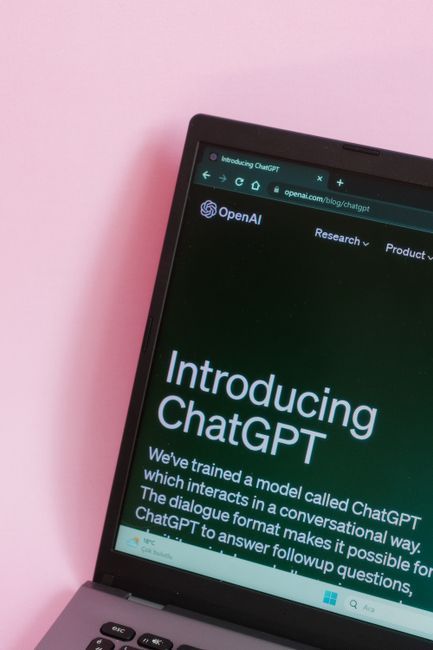
Laptop screen showing the ChatGPT homepage on a dark interface against a pink background
July 30, 2026
Most business websites are just digital brochures. They look professional, explaining what you do, listing your services, but not generating leads.
By Jon Richardson July 4, 2026
If your website were your sole source of leads, would you have a business today?
By Jon Richardson June 29, 2026
How to get found in AI Things are different now. For a long time, small business owners were told to aim for page one on Google. You worked on keywords, updated your meta tags, and hoped it would pay off. But now, the way people find your business is changing quickly. Google’s search results are starting to be replaced by AI Overviews . Instead of scrolling through links, people now ask ChatGPT, Gemini, and Perplexity for recommendations. These tools are not just search engines; they are answer engines. If your website isn’t set up for Large Language Models (LLMs), your business may not show up for the AI assistants your customers use. Here’s what you should know to stay visible in today’s digital marketing world. Stop Thinking Keywords, Start Thinking Context Traditional SEO focused on matching words. If someone searched for "plumber in Christchurch," you made sure that phrase was on your page. LLM optimisation, sometimes called Generative Engine Optimization (GEO), is different. AI models look for understanding, not just keywords . AI reads your site to learn who you are, what you offer, and how trustworthy you seem. When someone asks ChatGPT, "Who is the best web designer for a small law firm in Bournemouth?", the AI checks its training data and the web for the best answer. If your site only has keywords and lacks clear context, the AI will ignore it. The AI Playbook: 3 Ways to Get Recommended To show up in AI-generated answers, your website should be a main source of reliable information. Here’s how you can do that: 1. Use the "Inverted Pyramid" for Answers AI models work quickly and want answers right away. Set up your service pages like a news article: The Direct Answer: Start with a 50-60 word summary that explicitly states what you do and who it's for. The Context: Next, explain how you work, why you do it that way, your process, what makes you different, and your local knowledge. The Proof: Finish with facts, customer testimonials, and real case studies. If you run a cleaning company in Southampton, don’t hide your list of services at the end. Let the AI and your visitors know what you offer right at the start. 2. Turn Headings into Questions People talk to AI. They ask things like, "How much does a new website cost in Dorset?" or "What's included in a social media management package?" Instead of a plain heading like "Our Prices," try a question such as "How much do our web design services in Christchurch cost?" This makes it much easier for an LLM to match your content to what users ask. 3. Make the Most of Structured Data (Schema) Schema Markup is a special language for machines. It’s code that tells AI your business name, your address in the New Forest, your opening hours, and your service categories. At Overt Digital Media, we make sure every site we build uses advanced SEO and schema tagging. This way, when an AI bot visits your site, it doesn’t have to guess your details. It knows them for sure. Why Local Authority Still Wins AI models care about how close you are and your reputation. They look for real businesses with a strong presence. That’s why it’s more important than ever to be consistent across the web. If your address is different on social media and your website, it can confuse the AI. Whether you run a micro-pub in Bournemouth or work as an IT specialist in Southampton, keeping your Name, Address, and Phone (NAP) consistent across Dorset and Hampshire signals to AI that your business is real and trustworthy. Is Your Website Ready for the AI Shift? The shift from traditional search to AI-driven answers isn’t coming; it’s happening right now. The businesses that adapt today will be the ones ChatGPT and Gemini recommend as top choices tomorrow. Don’t let your business disappear online. Make sure your website is speaking clearly to these new AI models. Is your website AI-ready? Get a free website audit today and we'll show you exactly where you stand and how to start ranking for the future.
By Jon Richardson June 24, 2026
This is a subtitle for your new post
By Jon Richardson June 20, 2026
Do you really need an AI Agency in 2026?
By Jon Richardson June 8, 2026
This is a subtitle for your new post
By Jon Richardson May 18, 2026
How to Choose the Right AI Agency for your business The AI gold rush is in full swing. Spend five minutes on LinkedIn or at any networking event, and you’ll see plenty of AI consultants. That’s the problem. Every agency is suddenly an "AI agency." Every consultant is an "AI expert." Strip away the buzzwords, and most business owners are left asking a very fair question: What am I actually paying for here? If you're thinking about bringing AI into your business, and you should be, you’re probably not looking for something flashy. You want less admin. Fewer repetitive jobs and more time for the work that actually matters. That’s really what this comes down to. The right partner helps you get time back. The wrong one gives you an expensive toy you won’t use. So if you're trying to work out who actually knows their stuff and who’s just rebranded last week, here’s how to tell. 1. Don’t be blinded by the technology The biggest mistake you can make is hiring someone who talks about technology before they understand your business. You’ve probably heard the pitch before. We can install this clever tool. We can build that smart assistant. Fine. But if they haven’t asked how your enquiries come in, where jobs get stuck, or what your team keeps doing manually every single day, they’re guessing. A good partner starts with questions like: "What happens with inbound leads?" "Where do things slow down?" "What are you doing several times per day?" "What takes up time and headspace for no good reason?" That’s the real starting point. Not the software. Not the demo. Not the dramatic promises. If they can’t clearly explain why something will make your day easier, save your team time, or remove a bottleneck, it’s probably not the right fit. If getting a few hours back each week sounds useful, get in touch, and we’ll help you spot the obvious time drains. 
By Jon Richardson April 11, 2026
Let’s be honest: you’re probably tough to contact That’s not a criticism. It just means you’re successful. Whether you’re a solicitor in Christchurch, a high-end salon owner in Bournemouth, or a trade specialist in the New Forest, you’re busy, in meetings, on-site, and focused on the work that keeps your business running. Here’s the issue: while you’re focused on your work, you’re missing new opportunities. When a contact form goes unread for hours, or a call goes to voicemail, you’ve effectively lost that lead you have worked so hard for. In today’s world, the fastest responder wins—not just the one who offers the best service. If you slow your sales process, you could lose leads before you even speak with them. The Brutal Reality of "Speed to Lead" People expect quick answers. If someone in Bournemouth needs a service at 7:35 PM on a Saturday, they want their problem solved right away or at least to know that someone will help as soon as possible. Your chances of converting a lead drop by 80% if you wait more than ten minutes to respond. By the time you finish a coffee or a client call, your lead may already have contacted someone else. If you’re not the first to answer or reply, you risk losing out. Today’s customers see slow responses as unreliable. If you take two days to respond to a quote request, they might think the whole job will take much longer. The Manual Bottleneck: Why You Are the Problem Most business owners we meet at Overt Digital Media value their personal touch. They like to answer emails themselves and to be the voice on the phone. But this approach may slow your growth. Think about your current process: A potential customer fills out a form on your website. An email notification lands in your inbox (among 50 other emails). You see it 45 minutes later while grabbing lunch. You tell yourself, "I'll reply when I get back to the office." You get back to the office, get distracted by an urgent issue, and finally reply at 6:00 PM. By 6:00 PM, that lead has already booked a consultation with another s eo agency in Christchurch or a different local provider who has a system in place to catch them instantly. Manually following up is tiring and inconsistent. It often makes you switch tasks, breaking your focus and lowering productivity. You end up doing admin work for free and missing out on income. Enter the 24/7 Gatekeeper: The AI Receptionist The most common problem is missing phone calls. You might be on another call, driving, or simply taking a break from work. Voicemail rarely works for leads. Fewer than one in ten people leave messages; most just hang up and call someone else. This is where an AI Receptionist comes in. Unlike a traditional answering service, which just takes a name and number. An AI receptionist can actually handle the inquiry. It can answer questions, qualify leads, and even book an appointment directly in your calendar. Picture a client calling your business at midnight. Instead of no going through to voicemail, they reach an intelligent assistant who answers their questions and books a meeting for Monday morning. You wake up to a full calendar, and your client feels confident. This is how you stay ahead without answering every call yourself. Book a demonstration of our AI Receptionist
By Jon Richardson March 23, 2026
Is your business closed after 5? - The cost of operating 9-5 in a 24/7 world