Why SEO is important for Small Businesses
Why SEO is essential for small businesses!
Why SEO is crucial for small business success.
Search Engine Optimisation (SEO) is crucial for small business success because it helps your business get found by potential customers when they are searching for the products or services that you offer. With 80% of consumers turning to search engines like Google to find what they need, it is essential to ensure your potential customers can find your website easily.
SEO helps to get your business to the top of the search engine results pages (SERPs), which means that it is more likely to be seen by potential customers. An effective SEO strategy will generate more traffic for your website traffic, increasing the number of leads and, ultimately, more sales for your business.
Whilst there is an investment required to implement an SEO service compared to traditional forms of advertising such as television or print ads, SEO is very cost effective and doesn't require a large budget. As a result, small businesses can achieve a strong online presence with a limited budget by implementing the right strategies.
With a strong online presence, small businesses can be noticed by potential customers in today's digital age.
Read our recent blog on why every new website needs SEO
How SEO can help small businesses compete with larger companies.
SEO can level the playing field for small businesses competing with larger companies. While larger companies may have more resources to invest in their online presence, SEO allows small businesses to make the most of their limited resources.
SEO can help small businesses compete by making it easier for them to be found by potential customers. Optimising their websites and content for search engines can increase your website's visibility in the search engine results pages (SERPs), making it more likely that potential customers will see your website. This will attract more traffic to your websites and ultimately increase sales.
Another way that SEO can help your small businesses is by establishing you as an authority in your field. By creating high-quality, informative content that is optimised for search engines, you can position your website as a valuable resource for your customers. SEO optimised content will build trust and credibility, increasing sales and customer loyalty.
Measuring the ROI of your small business SEO efforts.
Measuring the return on investment (ROI) should be a key aspect of any marketing function, and SEO is no exception.
By understanding the ROI of your SEO efforts, you can make data-driven decisions about where to allocate resources and make improvements.
The key way to measure the ROI of your SEO efforts is by monitoring website traffic and understanding whether it is increasing and by how much.
By monitoring the number of visitors to your website before and after implementing SEO strategies, you can understand the impact of your SEO service. However, you will want to know how many website visitors found you by searching on Google rather than other methods. Google Analytics can provide the sources of your website traffic so that you can identify how your website is performing in search engine results.
Additionally, you can use tools such as Google Analytics to monitor the behaviour of your website's visitors. Google Analytics can give you insights into how users interact with your website, which can help you to identify areas of improvement for your SEO strategy.
Another way to measure the ROI of your SEO efforts is by tracking the ranking position of the keywords (search terms and phrases) you are targeting.
If you are using an SEO agency, they will be able to provide easily understandable reports to allow you to understand the performance of their SEO service.
Measuring the ROI of your small business SEO efforts can help you to determine the effectiveness of your SEO strategy and allow you to make informed decisions for further investment and how to improve results

Common mistakes small businesses make with SEO and how to avoid them.
Small businesses that try to implement SEO strategies themselves rather than use an SEO agency will often make mistakes that can negatively impact their online presence. Below are some common mistakes small businesses make and how to avoid them:
Failing to conduct keyword research: One of the most common mistakes small businesses make is failing to conduct keyword research. You need to understand the keywords potential customers are searching for to avoid targeting keywords that no one is searching for. This is because business owners often think about the solution rather than the problem or use jargon. Alternatively, you may target keywords that are too broad or have no commercial intent behind them. For example, someone may be searching for "web designer" for hundreds of different reasons, whereas searching for "web designer in Bournemouth" or "affordable web design" has a specific intent.
Ignoring on-page SEO: On-page SEO is the practice of optimising individual web pages to rank higher and earn more relevant traffic in search engines. Common mistakes in On-page SEO are not optimising the page title, meta description and header tags, failing to use internal linking, and not optimising images and videos. Optimise your title tags, meta descriptions, header tags, and images to improve your on-page SEO. If you are unsure what these terms relate to, then you should definitely employ an SEO agency.
Not creating quality content: Poor quality content can negatively impact your SEO efforts. To avoid this mistake, make sure to create high-quality, informative content that is relevant to your target audience. This will improve your rankings in search engines, help establish your business as an authority in your field, and attract more organic traffic to your website.
Not optimising for local SEO: Local SEO is essential for small businesses that rely on local customers. Common mistakes in local SEO are not claiming and verifying Google My Business listing, not having consistent NAP (Name, Address, Phone number) across the web, not having reviews and not optimising the website for local keywords such as Bournemouth or Christchurch. Instead, make sure to claim and verify your Google My Business listing, have consistent NAP across the web, and optimise your website for local keywords to improve your local SEO.
Above are just a few of the common mistakes many small business owners make. Unfortunately, there are plenty more, too many for this blog.
Tips for small business owners to improve their website's SEO.
There are many actions small business owners who don't want to employ an SEO agency can take several steps to improve their website's SEO and increase their online visibility. Here are some tips to consider:
Conduct keyword research: Identify the keywords potential customers are searching for and incorporate them into your website and content. There are many tools, both free and paid, you can use to conduct keyword research, such as SEMRush, AhRefs, and SERanking, but often the best sources of keyword research is talking to your customers and prospects to understand what they searched for when they found you.
Optimise your website: Make sure your website is optimised for search engines by including title tags, meta descriptions, header tags, and images. Also, ensure that your website is mobile-friendly, fast and has a security or SSL certificate (HTTPS)/
If you need help with any of these, a good website designer or SEO agency can help you.
Have a Blog and create high-quality content: Regularly publish high-quality, informative content that is relevant and valuable to your target audience. This will help to establish your business as an authority in your field and attract more organic traffic to your website.
Optimise for local SEO: Optimising your website for local keywords, such as Bournemouth, Christchurch or Poole etc., will help Google know what areas your business services. Claim and verify your Google Business listing. Ensure your business's NAP (Name, Address, Phone number) is consistent across the web.
Build quality backlinks: Backlinks are links from other websites to your website. The more quality backlinks you have pointing to your website, the higher your website will rank in search engine results. One of the ways to build backlinks is by creating quality and valuable content that others will want to link to. You can also list your company in the many online directories across the web.
Use social media: Promote your website and content on social media to increase visibility and attract more traffic to your website.
Consider using a local SEO Agency.
Small businesses often face the challenge of competing with larger companies for visibility in local search results. As we have discussed, SEO is a way to level the field and compete with larger companies. However, SEO is a complex subject that is ever evolving.
For this reason alone, you should consider using a local SEO agency. Below are some further reasons to consider employing an SEO agency:
Local SEO expertise: Local SEO agencies have a team of experts with specific knowledge and experience in optimising websites to ensure they appear in local search results. They understand the nuances of local SEO, including how to optimise your website for local keywords and how to claim and verify your Google Business Profile listing.
Cost-effective: Many small businesses assume that working with an SEO agency will be expensive, but it can be more cost-effective than doing it yourself. SEO agencies have the resources and expertise to implement effective strategies quickly and efficiently, which can save you time and improve your return on investment.
Data-driven approach: Local SEO agencies use data and analytics to track and measure the effectiveness of their strategies. By analysing the data such as website traffic, bounce rates, and conversions, they can make data-driven decisions to optimise your website further and improve your rankings in search engine results pages.
Flexibility: Working with a local SEO agency can provide you with more flexibility than doing it yourself. They can help you address specific challenges or goals that you may not have the resources to tackle.
Working with a local SEO agency can be more effective and affordable than doing it yourself. Local SEO agencies have the expertise and resources to improve your online visibility and reach more potential customers. They can also provide you with a data-driven approach, flexibility, and cost-effective solutions to improve your online presence and drive more business.
Conclusion
In conclusion, SEO is crucial for small businesses and enables them to compete with larger companies. Small businesses can create an affordable SEO strategy that will improve their online visibility, drive more traffic to their website and generate more leads.
However, working with a local SEO agency can be much more effective and affordable than doing it yourself. Local SEO agencies have the expertise and resources to focus on providing a consistent and effective SEO strategy designed to generate more customers for your business.
Suppose you're a small business owner and want to improve your online presence and grow your business by getting more customers. In that case, we encourage you to book a free SEO audit of your website today.
By taking this step, you'll better understand how your website is performing and what you can do to improve it. Our team of experts will analyse your website, identify areas for improvement, and provide you with a customised report and recommendations. So contact us now to book your free SEO audit and take the first step towards getting your website to the top of Google.
Contact an SEO Consultant Today
About Overt Digital Media
Overt Digital Media are a digital marketing agency located in Christchurch on the outskirts of Bournemouth. We specialise in helping small businesses with modern websites and affordable SEO services.
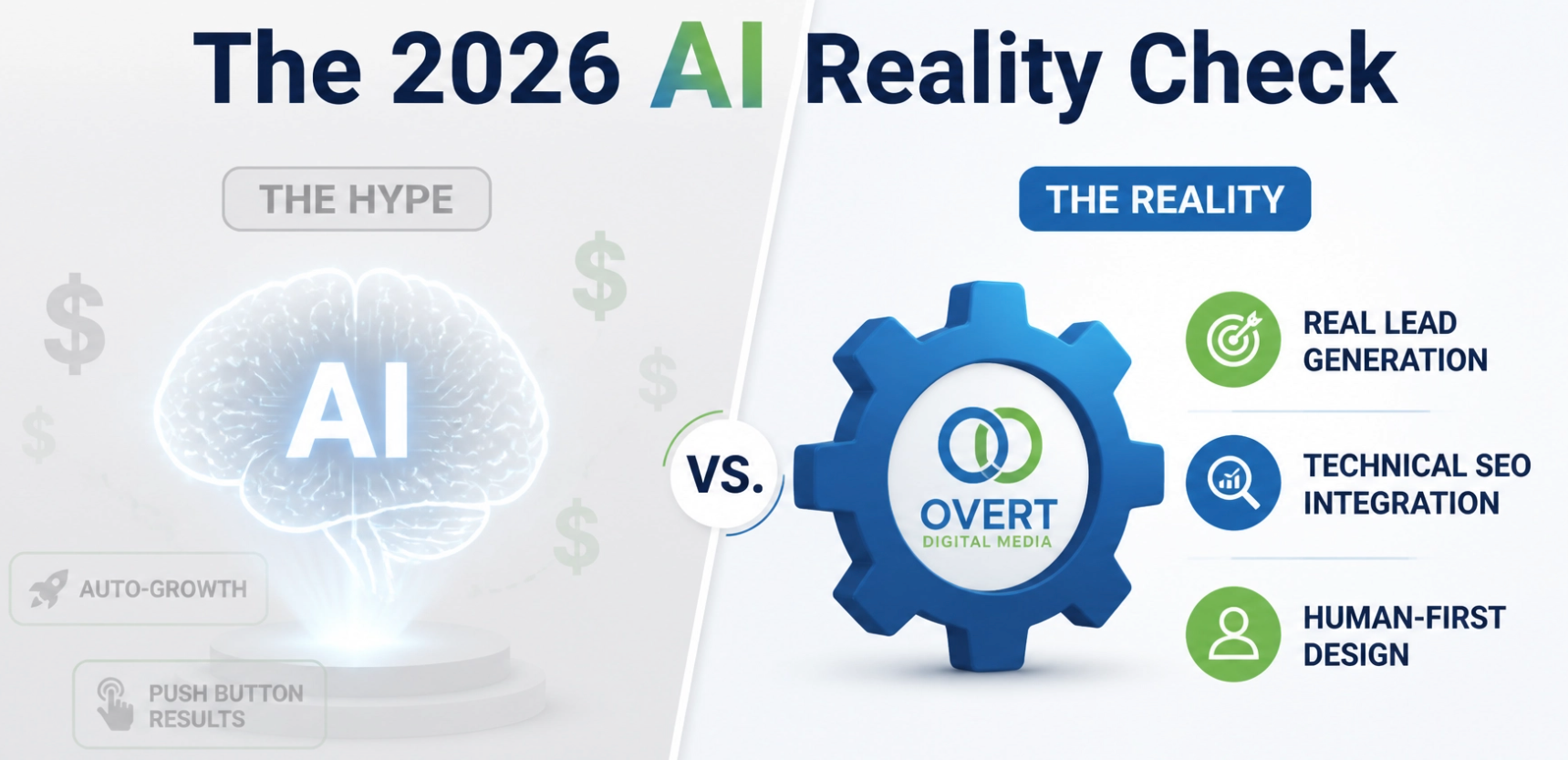
Our websites have artificial intelligence built which has been shown to increase the number of leads generated by up to 19%. Our SEO services are tailored for each client to ensure that they are both affordable and effective.
We provide a free marketing audit to help small businesses identify ways to generate more leads and sales from their online presence. If you need help growing your business then please get in touch with us today: