Why you should consider building a new modern website

Jon Richardson • January 15, 2023

There are many reasons why you should consider building a new website

A company's website is often the first point of contact for potential customers. It serves as an online storefront, providing information about products or services, and making it easy for website visitors to make a purchase or enquiry. In today's digital age, having a website is essential for any business that wants to be competitive.


However, there are around 1.9 billion websites in existence today. So just having a basic website is not going to cut it nowadays. Your website should be beautifully designed with valuable content to keep your visitors engaged and convince them to become customers.


If you already have a website over two years old, you should consider building a new one for several reasons.


First and foremost, technology changes and your website may be built on an old platform or have unsupported plugins. At the very least, you will be missing out on the benefits provided by new website innovations.


It is also likely that your business has changed in the past few years, and the content on your website may have needed to catch up with those changes. Therefore, a refresh of the content of your website could be overdue.


A new website can also increase your company's visibility and reach. A well-designed and optimised website will rank higher in search engine results, making it more likely that potential customers will find the company. This can lead to an increase in website visitors, which can translate into more sales or leads. In addition, a new modern website can be designed to be mobile-friendly, which is crucial as more and more people access the internet via their smartphones.


There have been many innovations in website design over the past few years, improving the user experience. A website that is easy to navigate and provides the information visitors need quickly and efficiently will keep them engaged and more likely to convert them into customers. A new website can be designed with the user in mind, using user experience (UX) best practices to make it easy for visitors to find what they need.


Artificial Intelligence is one of the more exciting developments in website design.  Read more about A.I. for websites


New content on your website can help establish you as a thought leader in your industry. Your website can be used to share valuable content, such as blog posts, infographics, and white papers, that educate and inform visitors. This can help establish you as an expert in your field and build trust with potential customers.


A new website can take advantage of new technologies and trends. The web is constantly evolving, and a website that is several years old may be using outdated technologies or design elements. A new website can be built using the latest technologies and trends, such as artificial intelligence, responsive design, or video, which can increase engagement and conversions.


You can read more about the latest developments in website design.


If you would like to know more about how a new website can benefit your business then complete the form below and one of our web designers will be in touch


Contact a web designer

Search Engine Optimisation (SEO) for your New Website


Search Engine Optimisation (SEO) is an essential component of any successful website. It is the process of making your website rank higher in search engine results pages (SERPs) such as Google, Bing and Yahoo. SEO is essential to ensure that your website will be at the top of Google for the terms your potential customers search for.


Below are some of the benefits you will receive by adding an SEO service to your new website


SEO Increases Website Visibility and Traffic


One of the main benefits of SEO is that it increases the visibility of your website in search engine results pages. This leads to more visitors to your website, which can ultimately lead to more leads and sales.


SEO is Cost-Effective and Affordable


Whilst SEO comes with a cost and can seem expensive, it is actually a cost-effective way to drive targeted traffic to your website. Unlike paid advertising, SEO is a long-term strategy that provides sustainable results over time.


SEO Builds Trust and Credibility


SEO helps to build trust and credibility for your brand by improving your visibility in search engine results pages. When your website appears on the first page of search results, it can be perceived as a more reputable and trustworthy source of information.


SEO Gives a Competitive Edge


In today's digital age, having a strong online presence is essential for any business. SEO can give your new website a competitive edge by helping it to rank higher in search engine results pages.


Read more about how SEO can help your business grow 


Why you should choose a local agency for your new website and SEO service


When building a new website and implementing an SEO strategy, it is best to work with a local agency. Here are a few reasons why:


Better Service:


Working with a local agency generally provides a better experience. This is because local agencies have a much better understanding of the local market and can tailor their services to meet the specific needs of your business. This can include understanding the local market and competition.


Better Communication:


Meeting your web designer or SEO consultant in person improves communication which is very beneficial when building a new website. It enhances collaboration and the understanding of your business goals and objectives. It also allows for better problem solving and decision making.


Better Understanding of Local SEO:


A local agency will have a better understanding of the local SEO landscape and how to optimise your website to rank well in local search results. A local SEO agency will be familiar with the directories and citations that are important for local SEO and the keywords that are relevant to the specific areas you are targeting.


Easier to Build Relationships:


Working with a local agency makes it easier to build long-term relationships. Local agencies are invested in the success of their clients and are often more responsive to their needs. This is particularly important regarding SEO, which is a long-term process requiring ongoing attention and work.


Local Agencies are more invested in your success.


Referrals and recommendations are important for every business. Website designers and SEO agencies are no different. A local agency will be more focused on providing a better service as it could lead to more recommendations and referrals for them.


Support Local Economy:


By working with a local agency, you can help to support the local economy. Small businesses are the backbone of local communities. By choosing to work with a local agency, you can help keep jobs and revenue in your area.


Conclusion


Building a new website can significantly benefit a company. It can increase visibility and reach, improve the user experience, establish the company as a thought leader and take advantage of new technologies and trends.


Additionally, SEO is an essential service for a new website. It increases visibility, drives targeted traffic and builds trust and credibility for your business. It will give you a competitive edge. By implementing an effective SEO strategy, you can help your new website to achieve its full potential and reach your business goals.


There are many advantages to working with a local agency when building your new website and implementing an SEO strategy. Generally speaking, you will get a better service from an agency that is invested in your success and who knows the local SEO trend and terms


Bournemouth's leading web design and SEO agency

Thank you for reading my blog,.  I hope you found it useful and informative.  I would love to hear from you with your feedback


Overt Digital Media is a digital marketing agency specialising in building modern websites and providing affordable SEO services for small businesses.  


Based in Christchurch, near Bournemouth, we service customers throughout the UK but mainly focus on helping companies in Bournemouth, Poole, the New Forest and Southampton.


Our excellent service and collaborative, open approach has ensured that we are one of the area's highest-rated web design and SEO agencies.  We are extremely proud of our excellent reputation.


Please get in touch if your company needs help growing or improving its online presence. We would love to chat over a coffee and learn about your business.

Contact Me

White wall-mounted air conditioner on a light-colored interior wall near the ceiling.
By Jon Richardson • November 10, 2026
See how our website design and local SEO services helped a Hampshire air conditioning company get noticed on Google and attract hundreds of customer enquiries.
Hand holding a smartphone showing a video call with a woman on screen and a blue button below.
By Overt Digital Media • November 3, 2026
Not sure what button your website needs? Learn how to choose the right call to action, from calls and quotes to bookings and price guides.
By Jon Richardson • October 24, 2026
Why AI Recommends Your Competitor Instead of You A customer asks an AI chatbot to recommend a local business. Your competitor appears. You don’t. That doesn’t always mean they’re better at what they do. It might just mean the chatbot found clearer or more recent information about them than about you. Imagine an AI tool as a careful friend giving advice. It looks at what it can find about you, your website, listings, reviews, and what people say. If it can’t find clear, up-to-date answers, it won’t feel sure about recommending you. Instead, it chooses the business it can confirm. The good news is that you can fix this, and you don’t need to know how AI works behind the scenes. Here are the main areas where you might be falling behind, and what you can do about each one. Ask the question your customer would ask. Before changing anything, find out what a customer sees when they ask AI about your type of business. Open ChatGPT or another AI assistant and type in the questions your customers really ask you on the phone. Instead of “recommend a good cleaner,” use the real question: “Find a cleaner who handles end-of-tenancy jobs, covers my area, and can quote this week.” Try three or four of these. Write down: Which businesses come up Whether yours is one of them What the answer says about each one Next, try the same questions in another AI tool, since answers can be different. Remember, what you see is just a snapshot for that day, not a final answer. S pend fifteen minutes asking AI the questions your customers ask. Write down which businesses show up and which don’t. Use that list as your starting point for the next steps. Say clearly what you actually do. A common mistake is describing your business with vague marketing words instead of clear facts. For example, a cleaning company might say it’s “your complete cleaning solution.” That sounds good, but it doesn’t tell a customer or an AI tool anything specific. Do you clean offices? Handle end-of-tenancy jobs? Offer weekly visits or one-off deep cleans? The competitor who clearly lists what they do on their page gets chosen, because the answer is easy to find. Look at each of your main services and make sure the page answers these five questions: What exactly do you do? Use the words your customers use, not industry words. Who is it for? Homeowners, landlords, small offices, whoever. Where do you work? The real areas you cover. What’s included, and what isn’t? What should someone do next? Call, book online, request a quote? To start choose your most important service. Read its page as if you’re seeing it for the first time, and add any of those five answers that are missing. Check that nothing important is hidden. Some websites look great but hide their most useful information inside pictures, in downloadable documents, or in boxes that only show up after clicking around. A customer might eventually find this information. But an AI tool often won’t, because it reads plain text on the page much more easily than anything hidden elsewhere. Try the phone test: open your main service page on your mobile phone and give it to someone who doesn’t know your business. Ask them to explain what they think you do, who you do it for and where you operate. That information should be in text near the top of the page, and easy for anyone visiting your website for the first time to someone can’t answer that in 5 seconds or so, then it needs to be addressed. Repeat this test with several people at regular intervals and amend yoru website where necessary. >>>Learn more about AI SEO <<<  Add a Frequently Asked Questions section. One page addition works harder than almost anything else you can do, and it takes an afternoon to set up: a set of FAQs. When a customer asks an AI tool a question, they usually ask it the same way they’d ask you on the phone: “How much does it cost?” “Do you come out to us?” “How quickly can you start?” An FAQ page is you answering those exact questions, in your own words, written down where both people and AI tools can find them. In other words, an FAQ section does two jobs at once. It saves you from repeating the same answers on the phone and gives AI tools ready-made answers to quote when someone asks about your type of business. How to add an FAQ section is simpler than it sounds: Write down the ten questions you hear most . These are often around price, timing, areas covered, what’s included, guarantees, and how to book. Answer each one properly in two or three sentences. Plain English with no jargon or acronyms. If the honest answer is “it depends, and here’s what it depends on”, say that. Put them on your website where people will need them . Don't lump all of your FAQs on a single page. Split them so that they are spread onto relevant pages. Don’t overthink the wording. The goal isn’t clever writing; it’s giving a clear, honest answer to a real customer's question. That’s exactly the kind of answer an AI tool wants to pass on. Write down your top ten customer questions and answer the first three on your website. If you're struggling then three is enough to start. Make sure your details match everywhere This step isn’t exciting, but it’s more important than most people think. Make sure that your business details are listed consistently and correctly on all of the places you are on online (your website, Google Business Profile, directory listings, etc.). If your website says one phone number. An old directory listing has another. Your Google profile still shows hours you changed two years ago. Your business name appears with “Ltd” in some places and without it in others. This creates real doubt for AI tools. If it’s not sure, it will pick the competitor whose details all match. Search your business name and check that these all match: Your website Your Google Business Profile The main directories you’re listed in Your Facebook page and other social profiles Check your business name, phone number, address or service area, and opening hours. If you find old or duplicate listings you can control, fix or remove them. Search your business name and write down every place where the details don’t match. Fix the most important ones first. Get more people talking about you. Your website always says good things about you, and people know that. What really convinces both people and AI tools is what others say about you. That means reviews and genuine mentions elsewhere: Ask happy customers for a review , and make it easy by texting or emailing them a direct link while their good experience is still fresh. Never buy reviews or pressure people to leave only positive ones—it’s obvious, and it hurts trust. Reply to every review , even the difficult ones. A calm, professional response to a critical review often impresses people more than praise does. Try to get mentioned in real places, like a trade association, local newspaper, supplier’s website, or community group. These should be genuine relationships, not paid directory listings that no one reads. All else being equal, a company with good recent reviews will be recommended more often than one with fewer or a lower rating. Make getting reviews an important part of your marketing and customer service processes. Check that your website isn’t accidentally hiding from AI. There’s one technical issue you should know about, and it’s more common than you might think. Websites have settings that control who can read them. Sometimes, by accident or because of an old default, these settings tell AI tools to ignore them. If that happens, AI simply can’t see your pages, no matter how good they are. You don’t need to touch any settings yourself. Just send this message to whoever looks after your website: “Can you check that our website isn’t blocking AI tools like ChatGPT from reading our pages? Please make sure our main service pages can be seen by search and AI systems, and let me know what you find.” That one email is all you need to do. A good web designer will know what to check, and if they say everything is fine, you can mark this task as done. If not, or if you're not confident in their answer, contact the team at Overt Digital, and we will run an audit of your website . In summary If your competitors are showing up instead of you, look at their online presence: a clear service page, up-to-date details, and recent reviews that address customer concerns. Then be honest with yourself and ask: How does your website compare to theirs? What are they doing that you are not? What's missing from your website? Sometimes those questions are hard to answer, so if you’d prefer someone else to review it, we offer a free website audit . I t shows you exactly what a customer and an AI tool see when they search for your type of business. There’s no pressure and no jargon, just a plain-English look at where you stand and what’s worth fixing first.
By Jon Richardson • September 9, 2026
AI receptionists are right for every business
By Jon Richardson • August 8, 2026
Is your website costing you money each month You’ve already invested in a website. Maybe you put it together yourself one weekend, or perhaps you hired someone a few years back. Either way, it’s out there for everyone to see. But here’s the problem: it’s not helping your business. Each month, you pay for hosting, domain renewals, and maybe a few plugin subscriptions. But the biggest cost isn’t those monthly fees. It’s the steady flow of potential customers who visit your site, get confused, and leave for a competitor. When you think about redesigning your website, it’s easy to focus only on the upfront cost. You might think, "That’s money I could use somewhere else." But keeping an outdated or broken site running is rarely the cheaper choice. It could actually be your most expensive mistake this year. The Hidden Cost of an Underperforming Website Here’s what your current website might really be costing you behind the scenes: Lost enquiries every day: If your site loads slowly on a phone, or if visitors can’t tell what you do within five seconds, they leave. That’s not just lost traffic, it’s lost revenue. If you have Google Analytics set up, check your ‘Bounce’ rate - the number of visitors who leave (bounce) off your website within 10 seconds without taking further action. Wasted ad spend: If you run paid ads or social media campaigns pointing people to a site that doesn't convert, you are literally paying to for nothing Damage to your reputation: First impressions count. If your site looks like it’s from 2012, people may think your business is outdated too. When you think about all the missed phone calls and empty contact forms, a poorly performing website can cost you much more than fixing it ever would and the longer you leave it the more it will cost you. Looking at Your Website as an Investment Try to see a website update not as an expense, but as a way to earn money. A new website doesn’t have to be expensive. You don’t need fancy animations or complicated features. What matters is having a site that appeals to your customers, and is fast and clear, one that turns visitors into customers. When your website works well, everything changes. If a new site helps you get just two or three more clients each month, it quickly pays for itself.  How to Know When It’s Time for a Change You don’t need to be a marketing expert to spot when your site is outdated. Ask yourself these three questions: Can someone figure out how to work with you within ten seconds of landing on your homepage? Don’t trust your own judgement here, ask someone who doesn't know your business Does the site load quickly and look good on your phone? Do you need to pinch or zoom at any point? Do people actually use your site to contact you, or is it just sitting there like a digital business card? If you answered no to the first two, or yes to the last one, your current setup is costing you more than you think. You don’t have to spend a lot to fix it. Take a look at our clear pricing options to see how easy it can be to upgrade your online presence, or contact us to discuss what a lead-generating website could look like for your business.
By Jon Richardson • July 30, 2026
The difference between damaging your reputation and improving your service The main concern most business owners have about AI receptionists is not whether the technology works, but whether it will harm their reputation. You've put in years of effort to build up trust with your customers, since they know you. The idea of them hearing a mechanical voice, realising they're speaking to a machine, and then quietly wondering if you've cut your budget is a genuine worry—and it calls for a serious response, not just some marketing nonsense. The real fear If you picture an AI answering your phone, you'll most likely have an image something like this: it will be flat, show no emotions, and lack social awareness. Its voice will at once make the person who is calling think "I'm speaking to a machine". It's the sort that stumbles when someone has a rather unusual name or puts in a question that is only slightly unexpected. It's the kind that makes you seem as though you've cut corners in your customer service. It seems risky for someone who is a plumber, electrician, accountant, or consultant since your phone is usually the first point of contact and a poor experience at that stage can result in you losing the contract before you've even produced a quote. The second concern is more subtle. Even if the AI functions perfectly, certain customers could still be put off by the fact that it is automated. They may not call us again next time and might tell their friends, "Yes, they've gone fully automated now." This kind of reputational risk seems genuine since, to some extent, it is. What’s actually changed Actually, there has been a remarkable improvement in AI voice quality over the past 18 months; the best systems no longer come across as obviously robotic and instead sound as if they are being spoken by a real person—specifically, a professional receptionist having a normal conversation. However, there is an important exception: not all AI receptionists are the same. Some do sound natural. Others still sound as if they have been processed. And the difference is very significant. A good AI receptionist should: Sound conversational, not scripted. Handle common accents and speech patterns without stumbling. Pause and think (just like a human receptionist does) Ask sensible follow-up questions. Know when to hand over to a human without making it awkward. The higher-quality ones manage to do it well, while the cheaper ones don't, and your customers will be able to tell the difference. The customer experience question That's where things become interesting. You could think that customers dislike speaking to AI, but research and practical experience indicate a more complicated situation. Customers are usually not upset when an AI receptionist is used, provided it actually deals with their issue. They telephone to book an appointment, report a problem, or obtain basic information. They are often content with this arrangement if the AI can look after it within thirty seconds; and they are certainly satisfied with it if the other option is to wait on the phone for five minutes or having to call back during business hours. The issue isn't the AI itself, but rather with a poor-quality AI that causes it to repeat itself, fails to understand, or forces them into a frustrating conversation; it's that kind of experience which is negative. As for a good one, most customers never even notice it. Even so, the risk is there. Certain customers—especially older ones or those with more complicated requirements—may prefer to speak to a human. They may feel more at ease booking with a live person, and there is merit in that confidence, particularly in cases where trust is important. Where the real risk is (and where it isn’t) An AI receptionist works well when: Most of your calls follow a predictable pattern (booking appointments, taking messages, basic troubleshooting) Your customers are comfortable with technology. Your business model benefits from handling calls 24/7 You’re solving the “missed call” problem (calls coming in when you’re with other clients) An AI receptionist is risky when: Every call is complex and needs expert judgment. Your brand position depends on the personal touch. You’re using it as an excuse to avoid hiring. You’ve chosen a cheap system with mediocre voice quality. The honest trade-off As long as you select the right AI receptionist and use it correctly, it won't make you come across as cheap; on the contrary, it usually makes you sound professional and well organised. A response such as "Thanks for calling; I'll get someone to you shortly" given by a system that sounds natural seems competent. But it will make you sound cheap if you: Use a system with obviously robotic audio. Let it fumble through calls instead of handing to a human. Configure it to sound generic and corporate instead of like your business. Use it to avoid hiring when you actually need staff. The true skill lies in being able to tell the difference between using AI for high-volume, low-complexity tasks (which is a proper use) and using it to completely bypass customer service (which is a wrong use); the first option allows your team to focus on higher-quality work, while the second only serves to annoy customers. What you should actually test Before you decide on using an AI receptionist, listen to actual examples. Not demonstrations in which they have rehearsed the conversation, but real calls, complete with awkward pauses and unexpected questions. Ask the provider: May I get some feedback on the way it deals with people who don’t adhere to the script? What does it sound like when it does not understand something? How does it pass over to a human? Could it deal with the particular terminology used by my business? So what is my customer data actually like in your system? If they won’t give you honest answers to those questions, that’s a red flag. If the audio samples all sound slightly too perfect, that’s another one. The better providers are transparent about their limitations. They know they won’t be right for every business. They know some calls need a human. And they’re happy to show you exactly what that looks like. Test our AI Receptionist - Lucy. Call 07441 350210 to talk to her directly  The bottom line It's not silly of you to be concerned about customer experience; in fact, that's precisely the right thing to be thinking about. However, the issue isn't whether an AI will damage my reputation; it's whether this AI, when used in this way, will improve or damage my reputation. The answer depends entirely on the item you are purchasing, how you set it up, and whether you are using it to improve your service or replace it. A good AI receptionist should not come across as a way of cutting costs; it should give the impression that you have improved your systems, and that's precisely what you do have if you handle the situation correctly. Learn more about how an AI Receptionist can help your business
Laptop screen showing the ChatGPT homepage on a dark interface against a pink background
July 30, 2026
Most business websites are just digital brochures. They look professional, explaining what you do, listing your services, but not generating leads.
By Jon Richardson • July 4, 2026
If your website were your sole source of leads, would you have a business today?
By Jon Richardson • June 29, 2026
How to get found in AI Things are different now. For a long time, small business owners were told to aim for page one on Google. You worked on keywords, updated your meta tags, and hoped it would pay off. But now, the way people find your business is changing quickly. Google’s search results are starting to be replaced by AI Overviews . Instead of scrolling through links, people now ask ChatGPT, Gemini, and Perplexity for recommendations. These tools are not just search engines; they are answer engines. If your website isn’t set up for Large Language Models (LLMs), your business may not show up for the AI assistants your customers use. Here’s what you should know to stay visible in today’s digital marketing world. Stop Thinking Keywords, Start Thinking Context Traditional SEO focused on matching words. If someone searched for "plumber in Christchurch," you made sure that phrase was on your page. LLM optimisation, sometimes called Generative Engine Optimization (GEO), is different. AI models look for understanding, not just keywords . AI reads your site to learn who you are, what you offer, and how trustworthy you seem. When someone asks ChatGPT, "Who is the best web designer for a small law firm in Bournemouth?", the AI checks its training data and the web for the best answer. If your site only has keywords and lacks clear context, the AI will ignore it. The AI Playbook: 3 Ways to Get Recommended To show up in AI-generated answers, your website should be a main source of reliable information. Here’s how you can do that: 1. Use the "Inverted Pyramid" for Answers AI models work quickly and want answers right away. Set up your service pages like a news article: The Direct Answer: Start with a 50-60 word summary that explicitly states what you do and who it's for. The Context: Next, explain how you work, why you do it that way, your process, what makes you different, and your local knowledge. The Proof: Finish with facts, customer testimonials, and real case studies. If you run a cleaning company in Southampton, don’t hide your list of services at the end. Let the AI and your visitors know what you offer right at the start. 2. Turn Headings into Questions People talk to AI. They ask things like, "How much does a new website cost in Dorset?" or "What's included in a social media management package?" Instead of a plain heading like "Our Prices," try a question such as "How much do our web design services in Christchurch cost?" This makes it much easier for an LLM to match your content to what users ask. 3. Make the Most of Structured Data (Schema) Schema Markup is a special language for machines. It’s code that tells AI your business name, your address in the New Forest, your opening hours, and your service categories. At Overt Digital Media, we make sure every site we build uses advanced SEO and schema tagging. This way, when an AI bot visits your site, it doesn’t have to guess your details. It knows them for sure. Why Local Authority Still Wins AI models care about how close you are and your reputation. They look for real businesses with a strong presence. That’s why it’s more important than ever to be consistent across the web. If your address is different on social media and your website, it can confuse the AI. Whether you run a micro-pub in Bournemouth or work as an IT specialist in Southampton, keeping your Name, Address, and Phone (NAP) consistent across Dorset and Hampshire signals to AI that your business is real and trustworthy. Is Your Website Ready for the AI Shift? The shift from traditional search to AI-driven answers isn’t coming; it’s happening right now. The businesses that adapt today will be the ones ChatGPT and Gemini recommend as top choices tomorrow. Don’t let your business disappear online. Make sure your website is speaking clearly to these new AI models. Is your website AI-ready? Get a free website audit today and we'll show you exactly where you stand and how to start ranking for the future.
By Jon Richardson • June 20, 2026
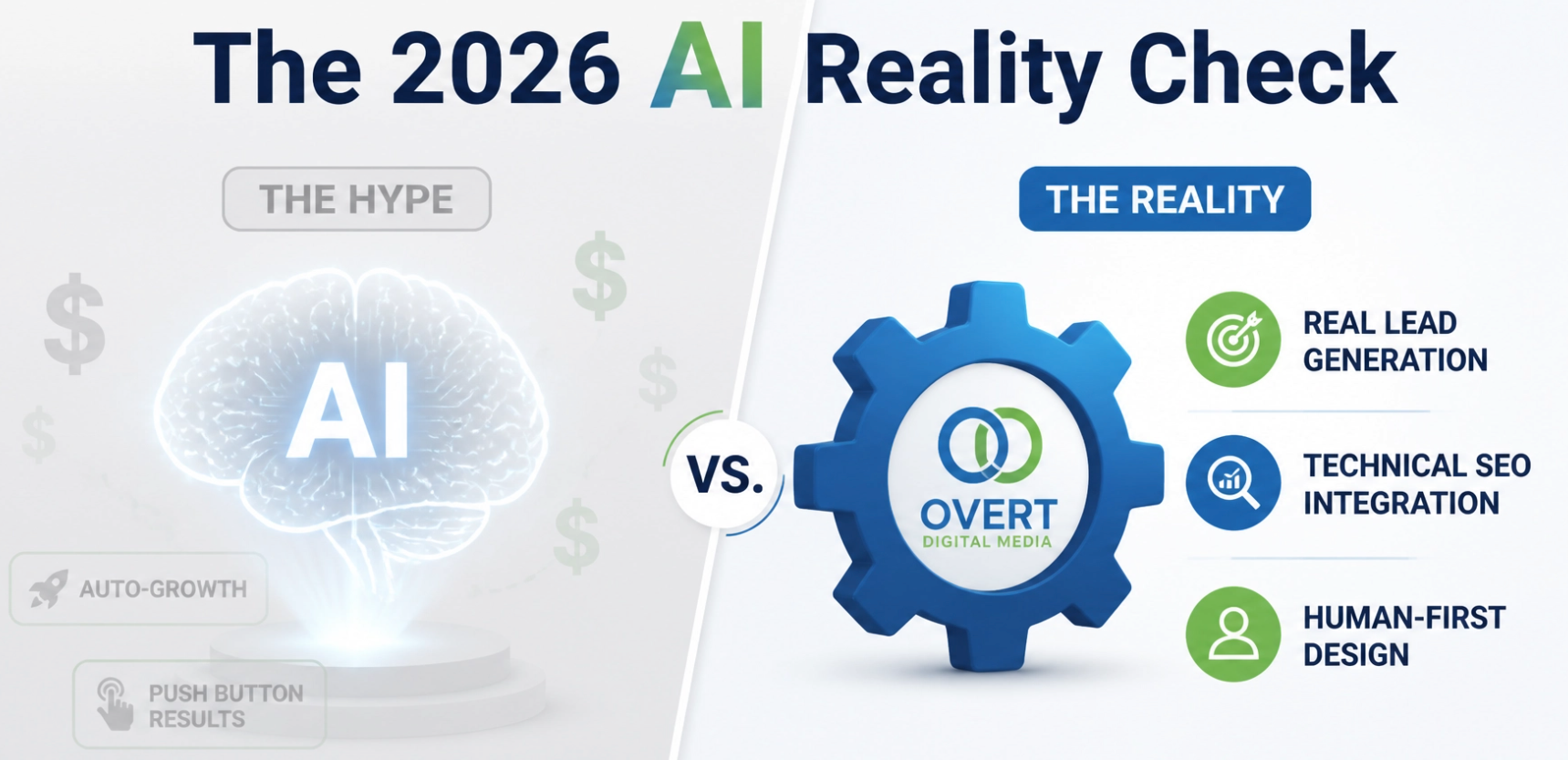
Do you really need an AI Agency in 2026?